
Sedation & General Anaesthesia
Sedation and general anaesthesia change consciousness, not the dental work: conscious sedation leaves the patient responsive, general anaesthesia does not.
- Two consultant anaesthetists
- Continuous monitoring
- Paediatric and adult protocols
First consultation free · same-day reply · no price pressure
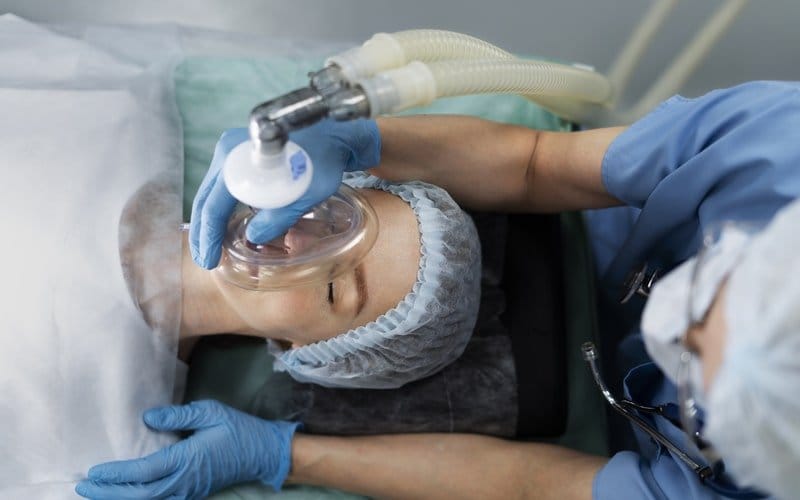
Sedation and general anaesthesia are ways of delivering dental treatment. They change how conscious the patient is and what monitoring the team must provide, and they never change what is done to the teeth. Under conscious sedation the patient is drowsy, responds to speech and breathes unaided; under general anaesthesia consciousness is fully suspended, breathing is supported and vital functions are watched continuously by an anaesthetist. The recorded safety data are specific. Across 3,742,068 office-based dental procedures under deep sedation or general anaesthesia in Ontario from 1996 to 2015, there were 3 deaths, an adjusted 0.8 per million cases (PubMed 31545669).
- 01Treat anaesthesia as a separate line in the plan, with its own consent, its own provider and its own quote. A package advertised as full-mouth treatment in one sitting is describing scheduling; the clinical work underneath stays the same.
- 02Monitoring is where the measurable difference lies. Adding capnography to pulse oximetry during intravenous sedation lowered hypoxaemia (RR 0.76, 95% CI 0.70-0.83) and desaturation episodes (RR 0.79, 0.71-0.87) and detected apnoea 2.60 times sooner, across 14 randomised trials (PubMed 32556657). Ask which monitoring is used and who watches it.
- 03There is no proven best sedative agent. A Cochrane review of 50 studies and 3,704 participants counted 34 different sedatives and could pool only oral midazolam against placebo (SMD 1.96, 95% CI 1.59-2.33, moderate certainty), with 81% of studies at high risk of bias (PubMed 30566228).
- 04Nitrous oxide did not separate from other techniques on the outcomes that were measured. Patient satisfaction, recall of the procedure and successful completion showed no statistically significant differences, and safety could not be assessed because none of the included studies investigated it systematically (PubMed 40428887).
- 05Dental fear is common enough to be planned for rather than improvised around. Pooled across 31 studies and 72,577 adults, prevalence was 15.3% (95% CI 10.2-21.2) for dental fear and 3.3% for severe dental fear (PubMed 33711405).
/ How Sedation Is Used in Dental Treatments
Sedation is an anesthesia method used to eliminate pain, anxiety and fear that may occur during dental treatments. With the effect of sedative drugs that provide comfort and forgetfulness, the patient who is in a state of drowsiness or half-unconsciousness does not remember the content of the procedure, pain perception decreases, and unwanted intraoral reflexes are prevented. A comfortable treatment experience can make it easier for the patient to come to dental treatment in the following sessions.
It can be performed with drugs that can be given intravenously, orally or rectally, and sometimes by inhaling a sedative anesthetic gas. It is a lighter method than general anesthesia, and recovery after the procedure is usually quicker.
It is an anesthesia method that can be applied, following the dentist's assessment, to children, adults and disabled patients who are afraid of dentists or needles, who cannot have dental treatments due to nausea, vomiting, gag reflex.
| At a glance | |
|---|---|
| Duration | Procedure-dependent |
| Warranty | · |
| Materials Used | Anaesthesia equipment · Monitoring |
Treatment Process
- 01Consultation: Initial examination and needs assessment; imaging where required.
- 02Treatment: Pre-op evaluation, anaesthesia administration, post-op observation.
- 03Follow-up: Outcome review and aftercare guidance.
/ General Anesthesia
General anesthesia is the patient's being fully anesthetized and connected to the anesthesia device during the procedure under the influence of the medications given in the operating room environment and under the control of the anesthesiologist. A nasal or oral breathing tube is attached to the patient and connected to the anesthesia device. The device delivers oxygen and anesthetic gas to the patient in a certain mixture until the procedure is completed. During the procedure, all vital functions of the patient are monitored instantly. In general anesthesia, there is a complete loss of consciousness, the patient in a deep sleep state does not see or hear anything, the sense of pain is completely eliminated. At the end of the procedure, the patient is awakened by appropriate methods.
General anesthesia is used for mentally handicapped individuals with communication difficulties, in surgical interventions requiring long procedure time where local anesthesia and sedation will be insufficient.
General anesthesia requires preparation before the procedure. According to the condition of the patient who is examined by the anesthesiologist, necessary tests such as ECG, lung x-ray, blood tests may be requested. Before the procedure, hunger and thirst for a certain period of time are required in adult and pediatric patients.
During sedation and general anesthesia, drug-related side effects, allergic reactions, airway difficulties and traumas can be seen. These unwanted effects can be quickly and easily eliminated under the control of an experienced team of experts. Nowadays, complications related to anesthesia are very rare when performed under appropriate conditions.
- 1.El-Mowafy A, Yarascavitch C, Haji H, Quiñonez C, Haas DA. Mortality and Morbidity in Office-Based General Anesthesia for Dentistry in Ontario. Anesth Prog 2019;66:141-150. PubMed 31545669
- 2.Silveira ER, Cademartori MG, Schuch HS, Armfield JA, Demarco FF. Estimated prevalence of dental fear in adults: A systematic review and meta-analysis. J Dent 2021;108:103632. PubMed 33711405
- 3.Ashley PF, Chaudhary M, Lourenço-Matharu L. Sedation of children undergoing dental treatment. Cochrane Database Syst Rev 2018;12:CD003877. PubMed 30566228
- 4.Piccialli F, Fiore M, Giurazza R, Falso F, Simeon V, Chiodini P, et al. Efficacy and Safety of Nitrous Oxide (N(2)O) Inhalation Sedation Compared to Other Sedative Agents in Dental Procedures: A Systematic Review with Meta-Analysis. Medicina (Kaunas) 2025;61. PubMed 40428887
- 5.Askar H, Misch J, Chen Z, Chadha S, Wang HL. Capnography monitoring in procedural intravenous sedation: a systematic review and meta-analysis. Clin Oral Investig 2020;24:3761-3770. PubMed 32556657

Who is this treatment for?
- Fear of the dentist or needles
- Inability to undergo dental treatment due to nausea, vomiting or gag reflex
- Pain, anxiety or fear during dental treatment
- Individuals with intellectual disabilities and communication difficulties
- Insufficient local anaesthesia and sedation during lengthy surgical procedures
Doctors specialising in this treatment


Frequently asked
01What is the difference between sedation and general anaesthesia?+
Conscious sedation keeps the patient drowsy but responsive; general anaesthesia produces full unconsciousness. An anaesthesiologist determines which is appropriate based on treatment scope and the patient's anxiety level.
02Is dental treatment under sedation safe?+
Yes. At Mosdent all sedation procedures are performed under the supervision of an anaesthesiologist with full monitoring; patient safety is managed to the highest standards. For scale: across 3,742,068 office-based dental procedures under deep sedation or general anaesthesia in Ontario from 1996 to 2015, there were 3 deaths.
Oral Surgery
Implant
A dental implant is a titanium screw replacing a lost tooth root; it usually fuses with bone in 3-6 months, then a zirconium or porcelain crown is fitted.
Explore→02Wisdom Tooth Extraction
Wisdom tooth extraction removes a third molar at the back of the jaw under local anaesthesia, sectioning it if impacted; not every wisdom tooth must come out.
Explore→03Oral & Maxillofacial Surgery
Oral and dental surgery, a four-year dental specialty in Turkey, covers impacted tooth removal, implant placement, root-end resection and jaw fracture repair.
Explore→04Jaw Correction
Jaw correction (orthognathic) surgery cuts and repositions one or both jaws at bone level to correct skeletal discrepancies that tooth movement cannot close.
Explore→05Jaw Fracture Treatment
Jaw fracture treatment depends on displacement: minimally displaced, stable fractures are held with wires or elastics, displaced ones with plates and screws.
Explore→06Bone Graft (Membrane)
A bone graft rebuilds deficient jawbone with graft material, in most cases under a barrier membrane, so an implant can be placed, usually 4-6 months later.
Explore→Speak with your doctor about this treatment.
Not sure which treatment fits? Tell us what’s wrong →