
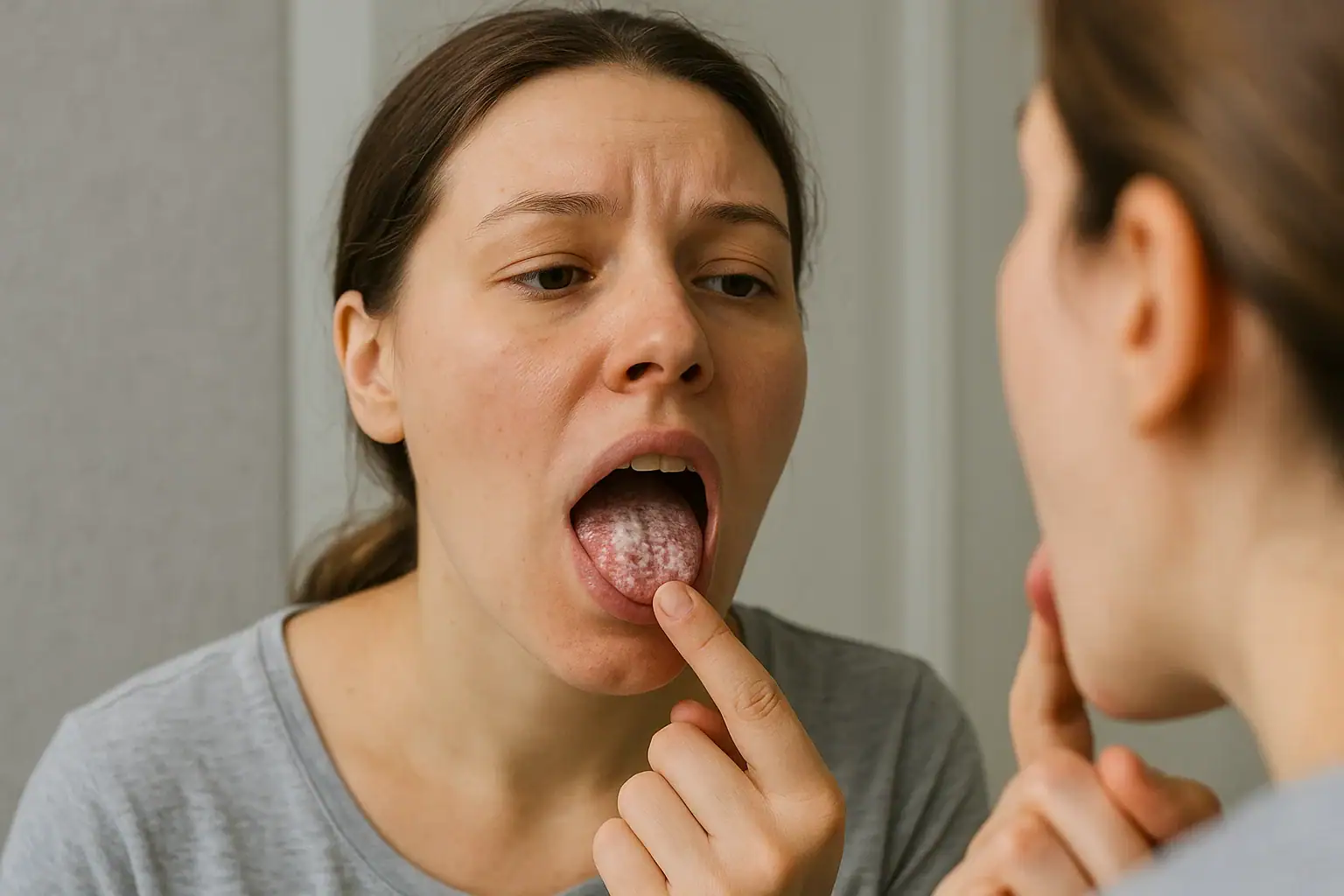
Oral thrush, or oral candidiasis, is an opportunistic fungal infection of the mouth caused by overgrowth of Candida, typically seen as white creamy plaques on the tongue, cheeks and palate with redness underneath. Treatment is antifungal, not antibiotic: in a meta-analysis of randomised trials, fluconazole gave a better clinical response than clotrimazole in adults (risk ratio 1.14) with a comparable mycological cure rate (risk ratio 1.03), while miconazole was recommended for infants (PubMed 34924340). Mild cases in healthy adults may settle in one to two weeks, but dentures, diabetes, inhaled steroids and dry mouth keep it recurring until the underlying cause is addressed.
- 01Oral thrush is Candida overgrowth rather than a bacterial infection, so antibiotics do not treat it and are in fact one of the triggers, because they disturb the normal oral flora.
- 02In adults, a meta-analysis of randomised trials favoured fluconazole over clotrimazole for clinical response (risk ratio 1.14, P = 0.001) with no difference in mycological cure (risk ratio 1.03) (PubMed 34924340).
- 03In infants, miconazole and nystatin gave similar clinical response (risk ratio 1.23) but miconazole reached a higher mycological cure rate (risk ratio 4.03, P = 0.03) (PubMed 34924340).
- 04Formulation and dose change the result with nystatin: pastilles at 400,000 IU produced a significantly higher mycological cure rate than 200,000 IU, and four weeks of pastilles performed better than two weeks (PubMed 27042008).
- 05Nystatin pastilles were significantly superior to placebo in denture stomatitis, which is why denture cleaning and overnight removal are treated as part of the therapy rather than as advice added on the end (PubMed 27042008).
/ Introduction
Oral thrush also known as oral candidiasis is a fungal infection in the mouth caused by the overgrowth of Candida albicans . It commonly appears as white patches on the tongue, inner cheeks, gums, or throat and can cause discomfort, burning, or difficulty swallowing.
If you are looking for information on oral thrush treatment, including treatment for oral thrush in adults, how long it lasts without treatment, and whether you can buy OTC oral thrush treatment, this detailed guide covers everything you need to know.
/ What Is Oral Thrush?
Oral thrush is a fungal infection in the mouth caused by Candida yeast. Normally, Candida lives harmlessly in the mouth, but when the immune system is weakened or the oral environment changes, the fungus can multiply and cause infection.
Common Symptoms of Oral Thrush
- White, creamy patches on the tongue, gums, and inside of cheeks
- Redness or soreness beneath the patches
- Burning sensation or pain in the mouth
- Cracks at the corners of the lips (angular cheilitis)
- Difficulty swallowing in severe cases
- Loss of taste or cotton-like feeling in the mouth
- In some cases, bleeding when the patches are scraped off
/ Causes and Risk Factors
Before discussing oral thrush treatment, it’s important to understand why it happens:
- Weakened immune system (HIV, chemotherapy, organ transplant patients)
- Diabetes – high blood sugar encourages yeast growth
- Antibiotic use – disrupts normal oral flora
- Steroid inhalers (for asthma/COPD) if not rinsed after use
- Dentures – poor hygiene or ill-fitting dentures increase risk
- Dry mouth (xerostomia) due to medications or dehydration
- Pregnancy or hormonal changes
- Smoking and alcohol use – these can dry out the mouth and alter oral flora
- Poor nutrition – low iron, folic acid, or vitamin B12 may contribute
Denture hygiene and a red, inflamed palate under a plate are the two findings we see most often in adults. Both are assessed as part of gum and oral mucosa treatment, inside the periodontology service.
/ How Long Does Oral Thrush Last Without Treatment?
One of the most common questions is: “How long does oral thrush last without treatment?”
- In mild cases, oral thrush may resolve on its own in 1–2 weeks, especially in healthy individuals.
- In adults with risk factors (diabetes, dentures, weakened immunity), it can persist for weeks or months without treatment.
- In severe cases, untreated thrush can spread to the esophagus (esophageal candidiasis), making swallowing difficult and requiring stronger antifungal therapy.
⚠️ Warning: Ignoring oral thrush can lead to recurrent infections or systemic spread in immunocompromised individuals. Treatment is strongly recommended.
/ What Is the Treatment for Oral Thrush?
Effective oral thrush treatment depends on the severity of infection and the patient’s overall health.
1. Antifungal Medications (Prescription)
- Topical antifungals:
- Nystatin oral suspension (swish and swallow)
- Clotrimazole troches (lozenges that dissolve in the mouth)
- Systemic antifungals (for resistant cases):
- Fluconazole (oral tablets)
- Itraconazole or ketoconazole (in more severe or recurrent infections)
2. Treatment for Oral Thrush in Adults
- Healthy adults with mild infection : Topical antifungals like nystatin or clotrimazole are usually enough.
- Adults with dentures : Antifungal therapy plus proper cleaning of dentures is essential.
- Adults with underlying conditions : Managing diabetes, adjusting inhaler use, or improving oral hygiene helps prevent recurrence.
- Older adults : More prone due to dry mouth, multiple medications, and dentures, require consistent follow-up.
/ Can I Buy Oral Thrush Treatment Over the Counter?
A very common question is: “Can I buy oral thrush treatment over the counter?”
- In many countries, oral thrush treatments require a prescription, especially antifungal medications like fluconazole or clotrimazole.
- However, there are OTC oral thrush treatment options that can provide relief:
- Antifungal mouth rinses (available in some regions)
- Antiseptic mouthwashes (chlorhexidine, hydrogen peroxide)
- Non prescription oral thrush treatment products like lozenges, oral probiotics, or herbal rinses
Can You Buy Oral Thrush Treatment Over the Counter?
Yes, in some cases you can purchase non-prescription remedies (such as antifungal creams for angular cheilitis or probiotics), but for proper antifungal drugs, a doctor’s prescription is often needed.
/ OTC Oral Thrush Treatment and Natural Remedies
If you’re looking for non prescription oral thrush treatment, the following options may help manage symptoms until you see a doctor:
Over-the-Counter Relief
- Antiseptic mouth rinses (chlorhexidine, hydrogen peroxide solutions)
- Probiotic lozenges to restore oral balance
- Pain relief gels to ease discomfort
- Moisturizing gels or saliva substitutes for dry mouth
Natural and Home Remedies
- Saltwater rinse – creates a hostile environment for yeast
- Baking soda rinse – alkalinizes the mouth and reduces fungal growth
- Yogurt or probiotics – restore healthy bacteria to compete with Candida
- Coconut oil pulling – natural antifungal properties
- Tea tree oil mouthwash (diluted, not swallowed): antifungal effect
- Aloe vera gel – soothing and antifungal
- Apple cider vinegar (diluted) – may help balance oral pH and fight fungus
/ How to Prevent Oral Thrush
- Maintain good oral hygiene : Brush and floss daily.
- Clean dentures thoroughly : Remove overnight and disinfect regularly.
- Rinse after inhaler use : Prevents yeast buildup in the mouth.
- Control blood sugar : Diabetics should monitor glucose levels.
- Limit sugar and yeast-rich foods : Reduces fungal growth.
- Avoid unnecessary antibiotics : Prescribed only when essential.
- Stay hydrated : Saliva naturally controls fungal growth.
/ Possible Complications of Untreated Oral Thrush
- Chronic discomfort and pain
- Nutritional deficiencies due to difficulty eating
- Spread to the esophagus (esophageal candidiasis)
- Systemic infection in immunocompromised patients
- Recurrent outbreaks if underlying causes aren’t managed
/ When to See a Doctor
Seek medical attention if:
- Oral thrush lasts more than 7–10 days despite home remedies
- You have difficulty swallowing or eating
- You experience frequent recurrences
- You have an underlying condition (diabetes, HIV, cancer therapy)
- You notice spreading to the throat or systemic symptoms like fever
/ FAQs About Oral Thrush Treatment
How long does oral thrush last without treatment?
Mild cases may resolve in 1–2 weeks, but in adults with risk factors, thrush can persist for weeks or months without treatment.
What is the treatment for oral thrush?
Treatment usually includes antifungal medications such as nystatin, clotrimazole, or fluconazole, along with improved oral hygiene and dietary changes.
Can I buy oral thrush treatment over the counter?
In most regions, prescription antifungals are required, but OTC options like antiseptic rinses and probiotics can provide temporary relief.
Can I buy over the counter treatment for oral thrush?
Yes, non prescription oral thrush treatment products exist (mouth rinses, probiotics, herbal remedies), but they may not fully cure the infection.
Can you buy oral thrush treatment over the counter?
Yes, symptom relief products are available OTC, but for effective antifungal treatment, you usually need a doctor’s prescription.
/ Conclusion
Oral thrush treatment varies depending on the severity and underlying cause. While mild cases may improve with OTC oral thrush treatment and natural remedies, persistent or severe infections usually require prescription antifungal medications .
Understanding the causes, recognizing the symptoms early, and taking preventive steps can significantly reduce the risk of recurrence. If you’re uncertain or if thrush persists, consult a healthcare provider for accurate diagnosis and tailored treatment.
✅ Final Advice: Don’t ignore thrush, especially if you have diabetes, use inhalers, or have a weakened immune system. Early treatment prevents complications and ensures faster relief.
Let’s plan the right treatment together.
Free Assessment→- 1.Xiao Y, Yuan P, Sun Y, Xu Y, Deng X, Wang X, et al. Comparison of topical antifungal agents for oral candidiasis treatment: a systematic review and meta-analysis. Oral Surg Oral Med Oral Pathol Oral Radiol 2022;133:282-291. PubMed 34924340
- 2.Lyu X, Zhao C, Yan ZM, Hua H. Efficacy of nystatin for the treatment of oral candidiasis: a systematic review and meta-analysis. Drug Des Devel Ther 2016;10:1161-71. PubMed 27042008