Turkey teeth is a colloquial label for the uniformly white, symmetrical smile makeovers performed on patients who travel to Turkey for dental treatment, usually laminate veneers or full-coverage crowns; it names a destination and a look, not a clinical technique. The decisive question is how much sound tooth is removed. Gravimetric measurement puts porcelain laminate veneer preparations at roughly 3% to 30% of coronal tooth structure and all-ceramic or metal-ceramic crown preparations at 63% to 72%, with a metal-ceramic crown removing 4.3 times more than a facial veneer (PubMed 12070513). Crown preparation is irreversible; veneer preparation need not be.
- 01The term describes a destination and an aesthetic rather than a procedure: the underlying work is veneers, crowns, implants or whitening, and each carries a different amount of tooth reduction.
- 02Preparation depth is the real dividing line: veneers remove about 3% to 30% of coronal tooth structure by weight, all-ceramic and metal-ceramic crowns 63% to 72% (PubMed 12070513).
- 03A metal-ceramic crown preparation removed 4.3 times more tooth structure than a facial-surface porcelain laminate veneer preparation, and 2.4 times more than an extended veneer preparation, in the same measurement (PubMed 12070513).
- 04Veneers are documented rather than risk-free: pooled cumulative survival was 89% (95% CI 84-94) at a median follow-up of 9 years across 13 studies, with fracture or chipping in 4% and debonding in 2% (PubMed 26757327).
- 05Material changes the number: glass-ceramic veneers reached 94% (95% CI 87-100) and feldspathic porcelain veneers 87% (95% CI 82-93) survival in the same analysis (PubMed 26757327).
In recent years, the term “ Turkey teeth ” has surged across TikTok, YouTube, and international media. From influencers to celebrities, thousands are flocking to Turkey for dental treatments that promise perfect Hollywood-style smiles at a fraction of the cost found in the UK, US, or Europe. But what exactly are Turkey teeth? Why has Turkey become a hub for smile makeovers? And is it safe?
/ Turkey teeth meaning
What Are Turkey Teeth?
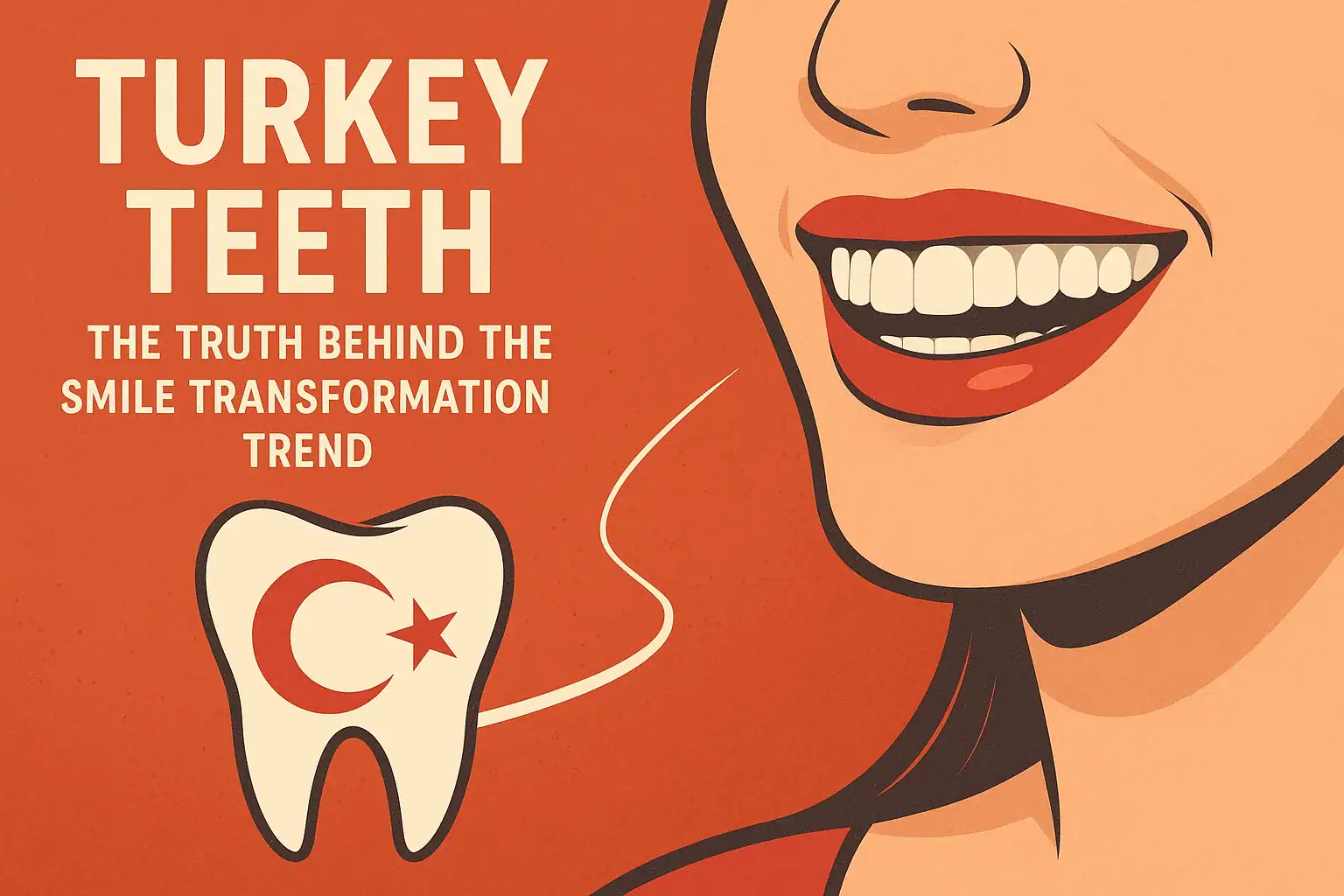
Turkey teeth is a colloquial term used to describe the ultra-white, uniform, and often dramatic smile transformations that many people receive while undergoing dental procedures in Turkey, particularly veneers, crowns, or implants .
Turkey Teeth Meaning:
- Often refers to dental veneers or crowns done in Turkey
- Typically very white and symmetrical
- Can involve removing natural tooth structure (especially for crowns)
- Sometimes used pejoratively if the result looks artificial
What Is the Turkey Teeth Trend?
This trend involves international patients, primarily from the UK, Ireland, Germany, and the Middle East, traveling to Turkey to undergo:
- Full smile makeovers
- Veneer or crown placements
- Teeth implants
- Laser teeth whitening
- Hollywood Smile treatments
The trend exploded due to:
- High dental costs abroad
- Viral TikTok and YouTube videos showing before/after results
- Turkish clinics’ reputation for skilled work and advanced technology
- Clinics organising travel and accommodation alongside treatment
Do Turkeys Have Teeth?
The answer is no, real turkeys (the birds) do not have teeth. The term "Turkey teeth" has nothing to do with the animal, but rather with the country of Turkey, which has become globally recognized for its high-standard cosmetic dentistry services.
/ Procedures and reasons patients choose Turkey for dental treatments
Most Common Procedures Behind Turkey Teeth
1. Turkey Teeth Veneers
Veneers are thin shells placed on the front of the teeth to improve appearance. Turkish clinics like Mosdent use materials such as:
- Emax (high translucency, natural look)
- Zirconium (high durability)
2. Crowns
Crowns cover the entire tooth and are often used when more structural support is needed.
- Zirconium or porcelain fused to metal (PFM)
- Requires more tooth reduction than veneers
- Long-lasting and robust
3. Teeth Implants Turkey
Implants are ideal for patients with missing teeth. At Mosdent, options include:
4. Teeth Whitening in Turkey
Laser or LED whitening can dramatically brighten the natural tooth color.
How much to get teeth whitened in Turkey?
It ranges from $150 to $300, depending on the clinic and technology used.
What Patients Weigh Before Travelling
Clinic Standards
Standards are set clinic by clinic, not country-wide, so they are checked one clinic at a time. At Mosdent the things a patient can actually verify are the sterilisation protocol, the digital equipment in use (photogrammetry and CAD/CAM among them), the implant and ceramic brands recorded in the file, and the written discharge record naming what was done.
Cost
Treatment fees in Turkey are generally lower than in the UK or Germany. How much lower depends on the treatment, the material and what the quoted fee covers, so the comparison worth making is between two written quotes rather than between two headline percentages.
The starting figures from our own published list give the order of magnitude:
| Treatment at Mosdent | Starting price |
|---|---|
| Laminate veneer, composite | from EUR 130 per tooth |
| Laminate veneer, E-max | from EUR 310 per tooth |
| Monolithic zirconia crown | from EUR 170 per tooth |
| Implant with abutment | from EUR 190 per implant |
| Hybrid zirconia full-arch prosthesis | from EUR 2,400 per jaw |
Prices at other clinics, here and abroad, are set clinic by clinic; the figure that applies to you is written down after an examination.
How Long It Takes
A veneer or crown case is usually staged over two appointments with laboratory time between them, and how many days that adds up to depends on the number of teeth and on whether any preparatory treatment is needed first. Implant cases are different again: the healing interval between placement and the final prosthesis is measured in months, not days, so a full-arch plan normally means two separate trips. Ask for the visit structure in writing before booking a flight.
What Mosdent Arranges for Patients Travelling In
- An online consultation before you travel, based on photographs and any radiographs you already have
- Airport and clinic transfers
- Help with hotel booking
- Interpreting during appointments
- A written record at discharge of what was done, which materials and brands were used, and when the follow-up is due
/ Safe Turkey teeth treatment and choosing a clinic
Is Getting Turkey Teeth Safe?
Yes, when done right.
Reputable clinics like Mosdent prioritize:
- Preserving natural teeth (offering veneers over crowns where possible)
- In-depth digital smile design
- Clear patient consultation before treatment
Unfortunately, some patients have negative experiences due to:
- Going to unlicensed or “budget” clinics
- Opting for irreversible procedures (full crowns on healthy teeth)
- Lack of aftercare support
That’s why choosing the right clinic is critical to safety and success.
Turkey Teeth Before and After: What to Expect
At Mosdent, each treatment begins with:
- 3D scans
- Intraoral digital photography
- Smile design mockups
- Shade and shape selection with the patient
Before/after galleries show transformations in alignment, brightness, and confidence.
Pros and Cons of Turkey Teeth
| Pros | Cons |
|---|---|
| Affordable pricing | Risk of overtreatment in low-quality clinics |
| Natural-looking results with Emax veneers | Requires travel |
| Advanced technology and fast turnaround | Communication barrier in some clinics |
| Internationally accredited facilities (e.g., Mosdent) | Long-term follow-up may require local dentist |
What to Look for in a Trusted Dental Clinic in Turkey
- Transparent consultation process
- Patient reviews on platforms like Trustpilot and Google
- Certifications and dentist bios on the website
- In-house lab and 3D imaging equipment
- Real before/after cases, not stock images
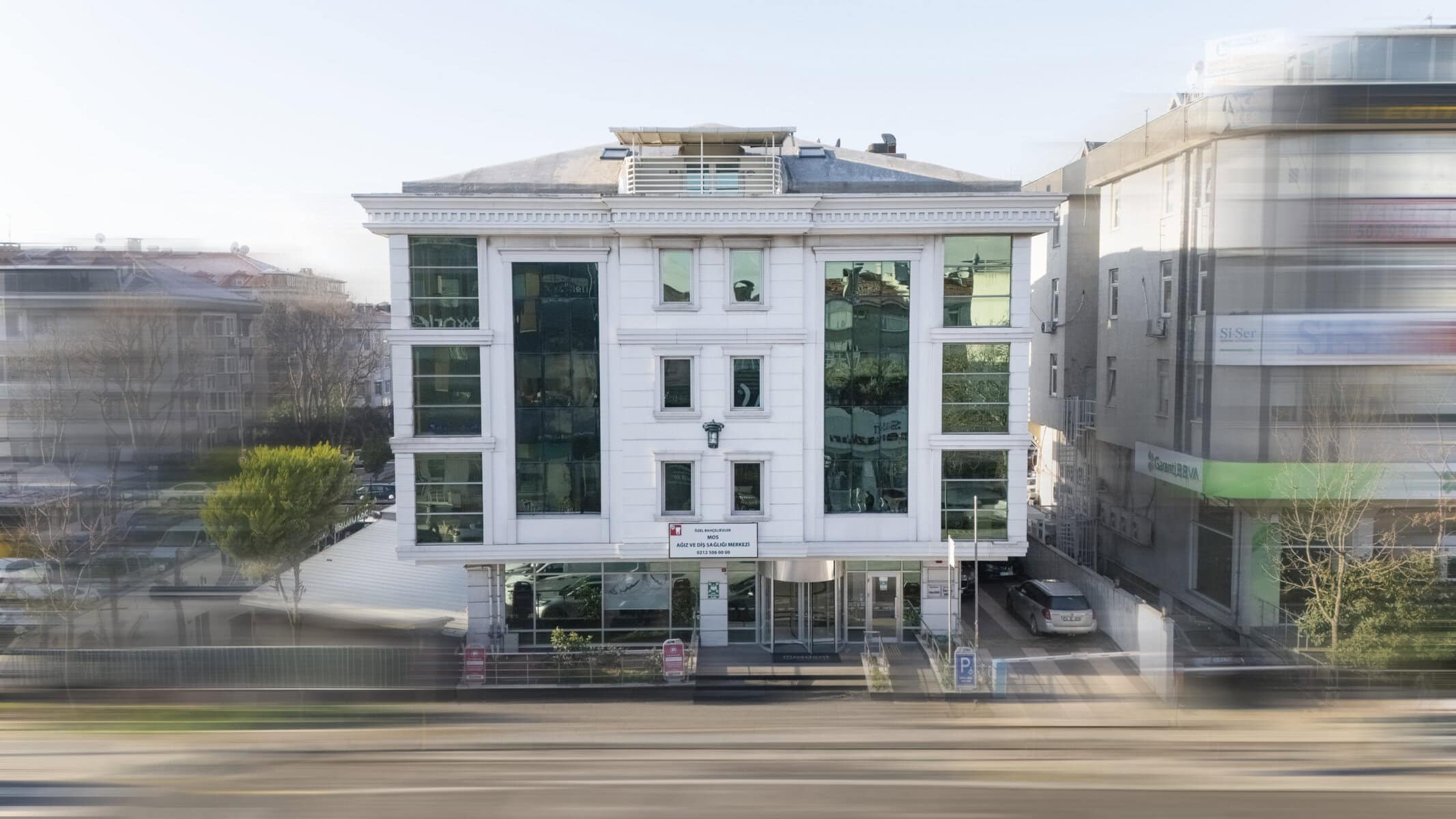
At Mosdent the team speaks English, Arabic, Russian and Persian, and treatment is planned in the hospital's own clinic and laboratory.
/ Common questions and final guidance for Turkey teeth
Commonly Asked Questions
What are Turkey teeth?
A slang term referring to veneers, crowns, or cosmetic dental treatments performed in Turkey.
What is Turkey teeth?
It generally means a full set of dental veneers or crowns done in Turkey, often for aesthetic improvement.
Do turkeys have teeth?
No, the term refers to the country Turkey, not the bird.
How much to get teeth whitened in Turkey?
Between $150–$300, depending on the clinic.
How much are teeth in Turkey?
- Veneers: $150–$300 per tooth
- Crowns: $100–$250
- Dental implants: $500–$1,000
- Full smile makeovers (20 teeth): $3,000–$5,000
Additional Considerations Before Getting Turkey Teeth
Long-Term Maintenance
After returning home, patients must maintain:
- Proper oral hygiene
- Night guards if prone to grinding
- Regular dental check-ups (locally or abroad)
Warranty and Follow-Up
Reputable clinics like Mosdent offer:
- Treatment warranties
- Remote follow-up via video call
- Partner dentists abroad for emergency touch-ups
Material Choice Matters
- Emax veneers : Thin, natural, ideal for minimal prep
- Zirconium crowns : Durable, suitable for back teeth or damaged teeth
- Composite veneers : Cheaper, less durable, sometimes used for short-term fixes
Are Turkey Teeth Reversible?
- Veneers (minimal prep): Partially reversible
- Crowns: Not reversible (natural teeth are shaved)
That’s why Mosdent recommends Emax veneers where applicable to preserve tooth structure.
Tips for a Successful Turkey Teeth Experience
- Ask for mock-up designs before starting
- Confirm all costs and inclusions in writing
- Avoid extreme “celebrity white” shades unless it fits your face
- Choose clinics with in-house labs for quicker and better results
- Understand the difference between veneers and crowns
Final Thoughts: Are Turkey Teeth Worth It?
Planned and carried out properly, the treatments behind the term can restore both appearance and oral function. The cases that made the news are the ones where healthy teeth were cut down without indication and without follow-up.
The key is choosing quality over quick fixes . Take time to research, ask the right questions, and never compromise your long-term health for short-term beauty.
Let’s plan the right treatment together.
Free Assessment→- 1.Edelhoff D, Sorensen JA. Tooth structure removal associated with various preparation designs for anterior teeth. J Prosthet Dent 2002;87:503-9. PubMed 12070513
- 2.Morimoto S, Albanesi RB, Sesma N, Agra CM, Braga MM. Main Clinical Outcomes of Feldspathic Porcelain and Glass-Ceramic Laminate Veneers: A Systematic Review and Meta-Analysis of Survival and Complication Rates. Int J Prosthodont 2016;29:38-49. PubMed 26757327