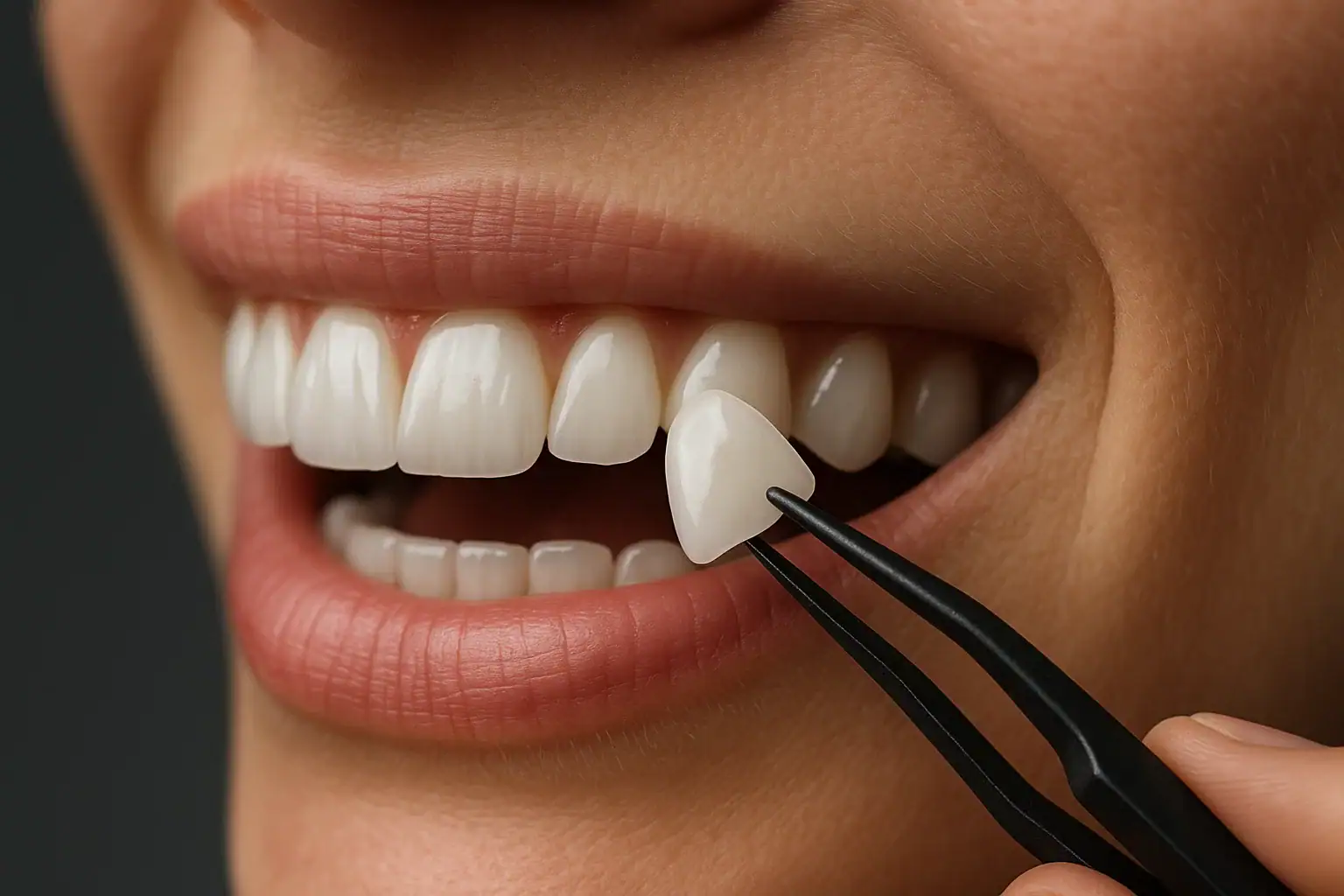
Emax veneers are thin shells of lithium disilicate glass-ceramic bonded to the front surface of a tooth, usually after 0.3 to 0.5 mm of enamel reduction, to change colour, shape or minor position. A meta-analysis of 46 clinical studies covering 4,209 restorations reported 90.2% survival for glass-ceramic laminate veneers over an average of 6.5 years (PubMed 38849264). An earlier meta-analysis of 13 trials put glass-ceramic veneer survival at 94% (95% CI 87-100) at a median follow-up of 9 years (PubMed 26757327).
- 01A veneer and a crown can be made from the same material but differ in coverage: a veneer covers the labial surface after roughly 0.3-0.5 mm of enamel reduction, while a crown encircles the tooth. In one meta-analysis glass-ceramic single crowns survived 96% over 4.6 years against 90.2% for laminate veneers over 6.5 years (PubMed 38849264).
- 02Failure has a measured shape: across 13 clinical trials the reported event rates were fracture or chipping 4%, debonding 2%, severe marginal discolouration 2%, endodontic problems 2% and secondary caries 1% (PubMed 26757327).
- 03Lithium disilicate is not an outlier among crown materials: pooled 5-year survival of leucite or lithium-disilicate reinforced glass-ceramic single crowns was 96.6% (95% CI 94.9-96.7) against 94.7% for metal-ceramic crowns, in a systematic review of 67 studies (PubMed 25842099).
- 04Veneer longevity is published as survival over a follow-up period, not as a promised lifespan: a 2025 meta-analysis of 29 studies gave lithium disilicate veneers 96.81% survival at 10.4 years (PubMed 39523553), and a single-centre series of 413 pressed lithium disilicate veneers reported 95% survival at 10 years and 87% at 20 years (PubMed 31168916).
- 05Preparation is irreversible. Enamel removed for a veneer does not regenerate, so once the tooth is prepared it stays in a restorative cycle regardless of which ceramic is chosen.
In an era where a radiant smile can open doors and boost confidence, cosmetic dentistry has surged in popularity, with millions seeking transformative solutions to enhance their appearance. Among the standout options, Emax veneers have emerged as a game-changer, offering a perfect blend of natural aesthetics and long-lasting durability for those desiring a flawless smile without extensive procedures. Whether you're dealing with stained teeth, chips, gaps, or minor misalignments, Emax dental innovations like these provide minimally invasive ways to achieve Hollywood-worthy results.
But what exactly are Emax veneers? These ultra-thin shells, crafted from premium lithium disilicate glass-ceramic, are designed to bond naturally to the front surface of your teeth, mimicking the translucency and strength of natural enamel. Developed by leading dental material experts, Emax is a leading material for Emax dental restorations, including Emax crowns and veneers, which extend similar benefits to full tooth coverage for added structural support. Unlike traditional options, Emax veneers require only minimal tooth preparation, preserving more of your natural structure while delivering good stain resistance and a measured long-term record: pooled survival of lithium disilicate veneers was 96.81% at 10.4 years (PubMed 39523553).
Emax veneers are a well-documented option in modern cosmetic dentistry for front teeth, balancing natural appearance, durability and conservative preparation. Let's explore how this innovative solution could be the key to your perfect smile.
/ What Are Emax Veneers?
Emax veneers, a cornerstone of modern Emax dental solutions, represent an advanced form of cosmetic dentistry designed to improve the look of your smile with unparalleled naturalness and resilience. At their core, Emax veneers are ultra-thin, custom-crafted shells that adhere to the front surface of your teeth, addressing aesthetic imperfections while preserving as much of your natural tooth structure as possible. These veneers are particularly revered in the field of Emax dental restorations for their ability to blend naturally with existing teeth, offering a transformative yet subtle enhancement.
The magic behind Emax veneers lies in their material composition: lithium disilicate glass-ceramic, a high-performance substance engineered for both strength and beauty. Developed by Ivoclar Vivadent and introduced in 2005 as part of the IPS e.max family, this innovative ceramic builds on decades of advancements in dental materials, evolving from the press ceramics of the 1990s into its current esthetic and mechanical specification. The manufacturer gives a flexural strength of 530 MPa for its CAD/CAM lithium disilicate block, IPS e.max CAD (ivoclar.com). In pooled clinical data, lithium disilicate veneers had far fewer technical complications than feldspathic veneers while survival was similar (PubMed 39523553). Its variable translucency levels, including high-translucency (HT) and low-translucency (LT) options, allow light to pass through much like natural tooth enamel, creating a lifelike glow that avoids the opaque, artificial look of older veneers.
/ Emax Veneers and Emax Crowns
What sets Emax veneers apart from Emax crowns?
While both utilize the same robust lithium disilicate material, veneers focus primarily on aesthetics, covering only the visible front portion of the tooth with shells as thin as 0.3-0.5mm. In contrast, Emax crowns provide full encirclement of the tooth, offering structural reinforcement for damaged or weakened teeth that require more comprehensive support, such as those with large fillings or root canals. This distinction makes Emax veneers ideal for cosmetic corrections like discoloration, minor chips, gaps between teeth, or slight misalignments, without the need for extensive tooth reduction.
Key features of Emax veneers include:
- Biocompatibility, which minimizes gum irritation and allergic reactions, and their stain-resistant properties that maintain brightness against coffee, wine, or other common culprits.
- Customizable in color, shape, and size, they can be tailored via CAD/CAM or press technologies for precise, patient-specific results.
- Best suited for anterior (front) teeth where appearance is paramount, Emax veneers are a common choice for a minimally invasive smile change. The manufacturer reports more than 230 million IPS e.max restorations worldwide across the whole product family, a figure based on sales rather than on clinical outcomes (ivoclar.com).
If you're exploring Emax dental options, understanding these fundamentals highlights why Emax veneers continue to redefine smile makeovers .
/ Benefits of Emax Veneers in Cosmetic Dentistry
For improving your smile, Emax veneers are a premium choice among Emax dental treatments, with benefits that combine modern material science with practical, patient-centered advantages. Crafted from lithium disilicate glass-ceramic, these veneers provide exceptional results for those seeking to address cosmetic concerns like discoloration, chips, or misalignment, all while prioritizing durability and natural aesthetics. Unlike traditional options, Emax veneers excel in offering long-term value through their robust construction and minimal impact on natural teeth, making them a favored solution for modern smile makeovers.
Key benefits of Emax veneers include:
1. Natural Appearance
One of the most celebrated advantages of Emax veneers is their natural appearance, which closely mimics the look and feel of real tooth enamel. The lithium disilicate material features high translucency, allowing light to pass through in a way that creates a lifelike glow and natural integration with surrounding teeth. This optical property ensures that Emax veneers avoid the opaque or artificial shine often seen in older porcelain alternatives, instead providing a subtle, realistic sheen that enhances your smile without drawing attention to the restoration itself. Customizable in shade, shape, and size, they can be tailored to match your unique dental profile, resulting in a Hollywood-level transformation that feels authentically you.
/ Emax Veneers Durability and Minimal Invasiveness
2. Durability
Durability is another cornerstone benefit, setting Emax veneers apart with their remarkable strength despite their slim profile. Engineered to withstand daily wear, these veneers are highly resistant to chipping, cracking, fracturing, and abrasion, thanks to the material's high flexural strength that can endure pressures far beyond typical chewing forces. In pooled clinical data at 10.4 years, technical complications were 6.1% for lithium disilicate veneers against 41.48% for feldspathic and 29.87% for leucite-reinforced glass-ceramic veneers, and lithium disilicate survival was 96.81% (PubMed 39523553). That record reduces the need for repairs and replacements over time.
3. Minimal Invasive
Emax veneers also shine in their minimal invasiveness, requiring far less tooth preparation than many alternatives. With thicknesses as low as 0.3 millimeters, they allow dentists to remove only a thin layer of enamel, often none at all in non-prep cases, preserving the majority of your natural tooth structure and avoiding extensive drilling. This conservative approach not only minimizes discomfort during the procedure (frequently performed without anesthesia) but also promotes better long-term oral health by maintaining the integrity of your teeth. As a result, patients experience quicker recovery times and fewer post-treatment sensitivities.
/ Emax Veneers Stain Resistance and Self-Esteem Benefits
4. Stain-Resistant
Stain resistance is a practical perk that keeps your smile bright and vibrant against everyday challenges. The non-porous surface of Emax veneers repels discolorants from coffee, tea, red wine, and other staining agents, ensuring the color remains consistent over the years without yellowing or dulling. This feature is particularly beneficial for those with habits that might otherwise compromise traditional veneers, allowing you to enjoy your favorite foods and drinks with confidence.
Beyond the physical attributes, Emax veneers provide a significant boost to self-esteem by correcting a wide array of imperfections. Whether it's closing gaps, evening out uneven teeth, or whitening stubborn stains unresponsive to bleaching, these veneers deliver versatile solutions for minor to moderate cosmetic issues. Their biocompatibility, free from metals that could cause allergies or gum irritation, further enhances comfort, making them suitable for sensitive patients.
Taken together, these are the reasons E-max is the usual first choice for front teeth when enough enamel is left to bond to. It is not the right answer everywhere: heavy grinding, a deep bite or a tooth already heavily restored can push the plan towards zirconia or a crown, and that decision is made at the examination rather than from a material list.
/ Emax Veneers vs. Traditional Porcelain Veneers
When choosing the right veneer for your smile makeover, understanding how Emax veneers stack up against alternatives is crucial for making an informed decision in Emax dental care. Emax veneers, made from lithium disilicate glass-ceramic, excel in balancing aesthetics and strength, but options like traditional porcelain, composite, zirconia , and Lumineers each bring unique attributes to the table. This comparison highlights key differences in strength, aesthetics, durability, longevity, cost, tooth preparation, and more, helping you weigh Emax crowns and veneers against competitors for optimal results. Whether prioritizing natural looks or budget, these insights reveal why Emax often emerges as a top contender in modern dentistry.
Emax Veneers vs. Traditional Porcelain Veneers
Traditional porcelain veneers, often crafted from feldspathic ceramics, have long been a staple for cosmetic enhancements, but Emax veneers offer advancements in material science. Lithium disilicate is the stronger material, with a flexural strength of 530 MPa given by the manufacturer for its CAD/CAM block (ivoclar.com), while traditional porcelain , which can be more brittle, is more prone to technical problems. Aesthetically, Emax's enhanced translucency better mimics natural enamel for a lifelike glow, while traditional options deliver solid natural appearances but with slightly less vibrancy. Pooled survival at 10.4 years is close, 96.81% for lithium disilicate and 96.13% for feldspathic veneers, but technical complications were far lower for lithium disilicate, 6.1% against 41.48% (PubMed 39523553). Cost-wise, they align at $800-$2,500 per tooth, and both require minimal tooth preparation (0.3-0.5mm enamel removal). Pros of Emax include greater durability and aesthetics; cons: the same irreversible tooth preparation. Traditional porcelain pros: Proven track record; cons: Slightly lower strength.
/ Emax Veneers Compared with Composite and Zirconia Veneers
Emax Veneers vs. Composite Veneers
Composite veneers, made from resin materials, offer a budget-friendly alternative but fall short in several areas compared to Emax. Emax boasts far superior strength and durability, resisting chips and cracks better than composites, which are more prone to wear and damage. Aesthetically, Emax provides a more natural, translucent finish that doesn't stain easily, while composites can discolor over time and appear less lifelike. Longevity favors ceramic: in a 10-year practice-based study, direct composite veneers failed at an annual rate of 4.1% against 1.2% for ceramic veneers (PubMed 35379471), with Emax requiring lab fabrication versus composites' single-visit application. Costs are lower for composites ($250-$1,500 per tooth) than Emax ($800-$2,500), and tooth prep is minimal for both, though composites are often reversible. Emax pros: Longer-lasting, better aesthetics; cons: Higher cost. Composite pros: Affordable, quick; cons: Shorter lifespan, staining susceptibility.
Emax Veneers vs. Zirconia Veneers
Zirconia veneers prioritize robustness, making them a strong rival to Emax for certain needs. Zirconia is chosen for strength: in a systematic review of 78 laboratory studies, translucent 4Y-PSZ zirconia averaged 803 MPa in flexural strength and 5Y-PSZ 570 MPa (PubMed 40738693), and it is often used for grinders or back teeth, though its greater opacity can cost aesthetics. Emax shines in translucency for a natural front-tooth look, while newer zirconia variants improve but don't fully match. Long-term evidence is on the Emax side: the pooled review found 100% survival for zirconia veneers at 2.6 years but no long-term zirconia data, against 96.81% at 10.4 years for lithium disilicate (PubMed 39523553). Costs are comparable ($1,000-$2,500 per tooth), but zirconia may require slightly more prep due to thickness. Emax pros: Superior aesthetics for visible teeth; cons: Less strength for heavy wear. Zirconia pros: High flexural strength; cons: Reduced translucency.
/ Emax Veneers Compared with Lumineers and Other Types
Emax Veneers vs. Lumineers
Lumineers, ultra-thin porcelain shells, emphasize minimal intervention, contrasting Emax's versatility. Emax provides better strength for broader corrections, while Lumineers are more fragile due to their 0.2-0.3mm thickness, but are sufficient for minor issues. Aesthetics are strong for both, with Emax offering superior translucency and customization; Lumineers deliver a bright, natural smile but may appear bulkier. The pooled veneer review reports survival by ceramic type rather than by brand, so no separate longevity figure is available here for Lumineers (PubMed 39523553). Costs align ($800-$2,500 per tooth), but Lumineers require little to no prep, making them reversible, unlike Emax. Emax pros: More durable for significant changes; cons: Irreversible prep. Lumineers pros: Tooth-preserving, quick; cons: Limited to mild imperfections.
| Type | Material | Pooled survival (follow-up) | Aesthetics (Translucency) | Strength/Durability | Tooth Prep | Cost (US$ per tooth) | Stain Resistance |
|---|---|---|---|---|---|---|---|
| Emax Veneers | Lithium Disilicate | 96.81% (10.4 years) | High | High | Minimal (0.3-0.5mm) | $800-$2,500 | Excellent |
| Traditional Porcelain | Feldspathic Ceramic | 96.13% (10.4 years) | High | Medium-High | Minimal (0.5mm) | $800-$2,500 | Excellent |
| Composite Veneers | Resin | 88% (24-97 months) | Medium | Medium | Minimal/None | $250-$1,500 | Medium |
| Zirconia Veneers | Zirconium Oxide | 100% (2.6 years; no long-term data) | Medium | Very High | Minimal-Moderate | $1,000-$2,500 | Excellent |
| Lumineers | Ultra-Thin Porcelain | No separate figure | High | Medium | None/Minimal | $800-$2,500 | Excellent |
Survival figures in the table come from pooled reviews of ceramic veneers (PubMed 39523553) and composite veneers (PubMed 38035903). Survival figures in the table come from pooled reviews of ceramic veneers (PubMed 39523553) and composite veneers (PubMed 38035903). This table summarizes the trade-offs, showing Emax veneers as a versatile, high-performing option for those seeking a blend of beauty and resilience in Emax dental solutions. Ultimately, consulting a dentist ensures the best fit based on your specific needs and oral health.
/ Emax Veneers Procedure Consultation and Smile Design
Transforming your smile with Emax veneers is a precise, patient-focused process that leverages the advanced properties of lithium disilicate ceramic for exceptional Emax dental results. This minimally invasive procedure typically unfolds over two to three visits, spanning 2-4 weeks, and combines digital technology, expert craftsmanship, and careful bonding to ensure your Emax veneers fit naturally while addressing issues like discoloration, chips, or gaps. Unlike more extensive restorations such as Emax crowns, which provide full-tooth coverage, the veneer process prioritizes aesthetics with minimal enamel alteration, making it ideal for front teeth enhancements. Below, we outline the step-by-step journey, drawing from established clinical practices to give you a clear picture of what to expect in your Emax dental transformation.
1. Initial Consultation and Smile Assessment
The process begins with a thorough consultation where your dentist evaluates your oral health, including teeth, gums, bite, and overall facial structure. X-rays, digital photographs, and 3D scans may be taken to assess suitability for Emax veneers, ensuring no underlying issues like decay or gum disease need addressing first. You'll discuss your smile goals, such as correcting stains, closing gaps, or improving alignment, and the dentist will explain how Emax's strength and translucency make it a superior choice. This stage sets the foundation, often including a virtual simulation to preview potential outcomes, helping you visualize the final Emax veneers results.
2. Smile Design and Treatment Planning
Using advanced Digital Smile Design (DSD) software, your dentist creates a customized plan tailored to your facial proportions, lip line, and tooth symmetry. Shade selection is crucial here, matching the veneers to your natural teeth for a natural blend, with options for high or low translucency based on your needs. Adjustments are made iteratively until you're satisfied, incorporating factors like veneer shape, size, and color gradients to achieve a natural, youthful appearance. This planning phase ensures the Emax veneers will enhance your smile without looking artificial, often involving mock-ups or wax models for tangible previews.
/ Emax Veneers Tooth Preparation Process
3. Tooth Preparation
Under local anesthesia to ensure comfort, the dentist gently removes a thin layer of enamel, typically 0.3 to 0.5 mm, from the front surface of the teeth. This minimal reduction, performed with precision tools, creates space for the veneers while preserving most of your natural tooth structure, a key advantage of Emax over more invasive options. The preparation extends slightly subgingival if needed for better contours and may involve refining interproximal areas to allow proper fit. Any old restorations are removed, and the teeth are shaped to optimize bonding, with the process taking about 1-2 hours, depending on the number of veneers.
4. Impressions and Digital Scanning
Once prepared, accurate impressions are captured using traditional molds or advanced 3D digital scanners for precise replication of your teeth. Bite registrations and shade tabs are recorded to guide the lab, ensuring the Emax veneers match in form and function. This data, along with photographs and any provisional models, is sent to the dental laboratory, where technicians use CAD/CAM technology to design the custom restorations. The accuracy here is vital for Emax's press or milling fabrication, minimizing adjustments later.
5. Placement of Temporary Veneers
To protect the prepared teeth and maintain aesthetics during the wait (usually 1-2 weeks), temporary veneers made from bisacryl or composite resin are fitted using a temporary adhesive. These provisionals allow you to eat, speak, and smile normally while providing a preview of the final look, with minor modifications possible for esthetics or comfort. They're evaluated in a follow-up if needed, and any feedback, like incisal edge position, is noted for the permanent Emax veneers. This step helps refine the design, ensuring the transition to permanents is smooth.
/ Emax Veneers Placement and Aftercare
6. Laboratory Fabrication of Emax Veneers
In the lab, skilled technicians craft your Emax veneers from IPS e.max lithium disilicate ingots using pressing or CAD/CAM milling techniques. Wax models transfer provisional data, shaping lobes, embrasures, and surface morphology for natural contours. The restorations are invested, pressed, divested, and refined with grinders to achieve precise margins and anatomy. Stains and glazes are applied and fired for color gradients, translucency, and a lifelike halo effect.
7. Try-In, Bonding, and Cementation
At the final visit, temporaries are carefully removed, and the Emax veneers are tried in individually and collectively using try-in paste to check fit, contacts, and esthetics. Adjustments are made for bite and appearance, then the veneers are etched with hydrofluoric acid (5% for 20 seconds), silanated, and bonded with a light-cure resin cement like Variolink Veneer. The teeth are prepared with bonding agents, and the veneers are seated under anesthesia if needed, cured with light, and excess cement removed. This permanent adhesion ensures durability and a natural feel.
8. Final Adjustments and Aftercare
Post-bonding, occlusion is refined, margins polished, and any sensitivities addressed, though minor discomfort usually resolves quickly. Your dentist provides aftercare instructions: brush twice daily with non-abrasive toothpaste, floss gently, avoid hard foods, and schedule regular check-ups every 6 months. In a series of 413 pressed lithium disilicate veneers followed for up to 20 years, estimated survival was 95% at 10 years and 87% at 20 years (PubMed 31168916), and the veneers require no special restrictions beyond good oral hygiene. This comprehensive approach underscores why Emax veneers are a leading choice in cosmetic dentistry.
/ Cost of Emax Veneers and Average Pricing
The cost of Emax veneers is a key consideration for anyone planning a smile makeover with Emax. These premium restorations, crafted from durable lithium disilicate ceramic, offer superior aesthetics and longevity, but prices can vary widely based on location, expertise, and customization. On average, Emax veneers range from $800 to $3,500 per tooth globally, with significant savings available through dental tourism destinations like Turkey. This section breaks down the pricing landscape, including regional differences, influencing factors, and comparisons to alternatives like Emax crowns and veneers, helping you budget effectively for your Emax dental investment.
Average Pricing by Location
Costs for Emax veneers fluctuate based on geographic region, reflecting differences in labor, materials, and overhead. In the United States, expect to pay between $1,200 and $3,500 per tooth, with major cities like New York or Los Angeles often at the higher end due to premium clinic fees. For a full set of 8-10 veneers (common for upper arch smile zones), totals can climb from $9,600 to $35,000, not including consultations or follow-ups. The emphasis on high-quality labs and advanced technology justifies these figures, ensuring precise fits and natural translucency.
In the United Kingdom, Emax veneers typically cost £600 to £1,500 per tooth, or about $750 to $1,900 at current exchange rates. London-based practices may charge up to £1,200 per unit, while regional clinics offer more affordable options around £600-£800. A set of 6-8 veneers might range from £3,600 to £12,000, with NHS coverage rarely applying since these are cosmetic procedures. UK pricing includes stringent regulatory standards, contributing to reliable outcomes in Emax dental work.
/ Emax Veneers Costs in Turkey and Influencing Factors
Turkey stands out for cost-effectiveness, attracting international patients with prices of $220 to $440 per Emax veneer, or roughly £180-£300. In cities like Istanbul or Antalya, a full mouth transformation (16-20 veneers) averages $3,400 to $8,400, often including packages with accommodation and transfers. These prices sit well below the US and UK ranges quoted above. Many clinics use the same Ivoclar Vivadent materials, but the material alone does not decide the result, so compare what each quote includes and who carries out the work. For Hollywood smiles incorporating Emax crowns and veneers, costs hover between $2,000 and $5,000.
Factors Influencing the Cost
Several elements determine the final price of Emax veneers, allowing for tailored budgeting.
First, the number of veneers plays a major role: single-tooth corrections are cheaper than full arch sets, with discounts often applied for multiples (e.g., 10 veneers at a reduced per-unit rate). Clinic location and dentist expertise also factor in that board-certified specialists in high-cost areas charge more for their precision and experience. Material variations, such as high-translucency vs. low-translucency Emax, can add 10-20% to the base price due to customization needs.
Complexity of the case influences costs too; severe discoloration or misalignment may require additional prep work, digital scans, or temporaries, bumping totals by $200-500 per tooth. Lab fees for CAD/CAM fabrication, which ensure Emax's superior strength, range from $130 to $250 per unit passed on to patients. Additional procedures like teeth whitening, gum contouring, or bite adjustments can add $500-2,000 overall. Finally, geographic and economic factors, including currency fluctuations and tourism packages in places like Turkey, can lower effective costs through bundled deals.
/ Emax Veneers Cost Compared with Other Veneer Types
Comparison to Other Veneer Types
Emax veneers often command a premium over alternatives due to their enhanced durability and aesthetics, but they're competitively priced within the high-end spectrum. Traditional porcelain veneers cost similarly at $900-$2,500 per tooth, though Emax's lithium disilicate offers better fracture resistance, justifying a slight upcharge of 10-15%. Composite veneers are more budget-friendly at $250-$1,500 per tooth. They also fail more often: over 10 years, annual failure rates were 4.1% for direct composite and 1.2% for ceramic veneers in a practice-based study (PubMed 35379471). Zirconia veneers, at $1,000-$2,500, provide superior strength for back teeth but less translucency, making Emax preferable for visible areas.
Lumineers, ultra-thin at $800-$2,000 per tooth, require minimal prep like Emax but are less versatile for major corrections. No-prep veneers range from $500-$2,000, cheaper than Emax. Emax crowns, used for structural support, cost $1,000-$3,000 per unit, higher than veneers alone due to full coverage. Overall, Emax strikes a balance, offering long-term savings through reduced replacements despite initial costs.
Financing and Insurance Considerations
Insurance rarely covers Emax veneers as they're deemed cosmetic, but some plans reimburse if tied to functional issues like cracks. Financing options abound: dental credit cards like CareCredit offer 0% interest for 6-24 months, while clinics provide in-house plans splitting payments over 12-36 months. In Turkey the fee is usually quoted per tooth, so a full set is that figure multiplied by the number of teeth in the plan; at Mosdent an E-max laminate veneer starts from EUR 310 per tooth. Weighing value, Emax's durability means fewer future expenses, potentially saving thousands over composites that need frequent touch-ups.
While Emax veneers represent a worthwhile investment for lasting Emax dental results, shopping around, especially considering international options, can optimize your spend without sacrificing quality. Consult a professional to get a personalized quote based on your needs.
/ Emax Veneers Pros
Emax veneers represent a high-end choice in Emax dental restorations, blending advanced lithium disilicate material for strength and beauty in smile enhancements. While they offer impressive advantages over traditional options, like superior translucency and durability, it's essential to weigh the pros against potential drawbacks to determine if they're the right fit for your Emax crowns and veneers needs. This balanced overview draws from expert insights to help you make an informed decision on incorporating Emax veneers into your cosmetic dentistry plan.
Pros of Emax Veneers
Emax veneers excel in several areas, making them a popular selection for those seeking long-lasting, natural-looking results.
- Natural Aesthetics : With high translucency that mimics natural tooth enamel, Emax veneers provide a lifelike appearance, reflecting light naturally for a bright, authentic smile without an artificial sheen. This feature is ideal for addressing discoloration, chips, or gaps, delivering customizable shades and shapes that blend perfectly with existing teeth.
- Exceptional Durability : Crafted from robust lithium disilicate, these veneers resist chipping, cracking, and wear better than many alternatives, withstanding daily pressures for enhanced longevity. Clinical data support their strength, making them suitable for active lifestyles and reducing the need for frequent replacements.
- Minimal Tooth Preparation : Requiring only 0.3-0.5mm of enamel removal or sometimes none, Emax veneers preserve more natural tooth structure, minimizing invasiveness and promoting better long-term oral health compared to traditional porcelain options.
- Stain Resistance : The non-porous surface repels stains from coffee, wine, and other foods, maintaining brightness over time and allowing greater dietary freedom without compromising aesthetics.
- Long Lifespan : Pooled survival for lithium disilicate veneers is 96.81% at 10.4 years (PubMed 39523553), offering good value through reduced maintenance and fewer interventions. Their biocompatibility also ensures comfort, with low risk of gum irritation or allergies.
/ Emax Veneers Cons and Suitability
Cons of Emax Veneers
Despite their strengths, Emax veneers have limitations that potential patients should consider.
- Higher Cost : Priced at $800-$3,500 per tooth, Emax veneers are more expensive than composite or some porcelain alternatives due to premium materials and lab fabrication, which may not be covered by insurance for cosmetic procedures.
- Irreversible Procedure : The enamel removal, though minimal, is permanent, meaning the process can't be reversed without additional restorations if issues arise.
- Potential Sensitivity : Some patients experience temporary tooth sensitivity after placement, particularly if underlying dental issues aren't addressed beforehand.
- Not Ideal for All Cases : They may not suit severe bruxism (teeth grinding) or extensive structural damage, where stronger options like zirconia might be preferred, and poor fitting could lead to complications like darkening or failure.
- Time-Intensive Process : Requiring multiple visits for consultation, preparation, and bonding, the procedure spans 2-4 weeks, which might inconvenience those seeking quicker fixes.
In weighing the pros and cons, Emax veneers often provide outstanding benefits for aesthetic-focused enhancements, but consulting a qualified dentist is key to assessing suitability based on individual oral health and budget. For many, the investment in durability and natural beauty outweighs the drawbacks, solidifying their role in modern Emax dental solutions.
/ Emax Veneers Daily Oral Hygiene Routine
Proper maintenance and care are essential to maximizing the lifespan and beauty of your Emax veneers, ensuring they remain a stunning part of your Emax dental smile for years to come. Made from durable lithium disilicate ceramic, Emax veneers are designed to withstand daily use while providing natural aesthetics, but like any dental restoration, including Emax crowns and veneers, they require consistent attention to oral hygiene and habits to prevent damage or staining.
Daily Oral Hygiene Routine
The foundation of Emax veneers care starts with a diligent daily oral hygiene regimen to keep plaque at bay and maintain the veneers' glossy finish. Brush your teeth at least twice a day using a soft-bristled toothbrush to gently clean the surfaces without scratching the ceramic material. Opt for a non-abrasive fluoride toothpaste, as harsh formulas can erode the glaze over time, leading to a dull appearance. Electric toothbrushes with soft heads are particularly effective for reaching around the veneers' edges, ensuring thorough removal of food particles and bacteria.
Flossing is equally crucial; do it once daily using unwaxed floss or interdental brushes to clean between teeth and along the gumline, where debris can accumulate and cause gum irritation or veneer loosening. For enhanced cleaning, incorporate a water flosser or Waterpik, which uses a gentle stream of water to dislodge particles without risking damage to the Emax veneers' bonds. Rinse with an alcohol-free mouthwash to reduce bacteria and freshen breath, avoiding those with high alcohol content that could dry out your mouth and affect veneer adhesion. This routine not only preserves the aesthetics of your Emax dental work but also supports overall gum health, preventing issues like recession that could expose veneer margins.
/ Emax Veneers Habits to Avoid and Professional Care
Habits to Avoid
To safeguard your Emax veneers from premature wear or damage, steer clear of certain habits that could compromise their integrity. Avoid biting into hard objects like ice, nuts, pens, or fingernails, as these can chip or crack the ceramic despite Emax's high strength. Similarly, refrain from using your teeth as tools for opening packages or tearing tape, which places undue stress on the restorations. If you grind your teeth (bruxism) or clench during sleep, wear a custom-fitted nightguard provided by your dentist to protect both your natural teeth and Emax veneers from excessive force.
Smoking or using tobacco products should be avoided, as they can stain the veneers over time and harm gum health, potentially leading to veneer failure. Limit consumption of highly pigmented beverages like red wine, coffee, or tea; if you indulge, rinse your mouth with water afterward to minimize staining risks. Excessive alcohol can dehydrate your mouth, reducing saliva flow that naturally cleans teeth, so moderation is key. By breaking these habits, you'll extend the durability of your Emax crowns and veneers and maintain their pristine condition.
Professional Care and Check-Ups
Regular professional maintenance is vital for the long-term success of Emax veneers, as dentists can spot and address issues early. Schedule dental check-ups every six months, during which your dentist will perform professional cleanings to remove tartar buildup that home care might miss. These visits include polishing the veneers to restore their shine and examining for any signs of wear, loose bonds, or gum problems. X-rays may be taken periodically to check the underlying tooth structure and ensure no decay is developing beneath the veneers.
If sensitivity or discomfort arises, consult your dentist promptly rather than waiting for your next appointment. Professional whitening treatments should be approached cautiously; while Emax veneers resist staining, over-the-counter whitening products won't affect them and could harm surrounding natural teeth. Your dentist might recommend specialized cleanings or adjustments to keep everything in harmony.
/ Emax Veneers Care and Longevity Tips
Diet and Lifestyle Tips
Your diet plays a significant role in Emax veneers care, influencing both stain resistance and structural integrity. While Emax's non-porous surface offers excellent protection, limit acidic foods and drinks like citrus or soda, which can erode enamel around the veneers and affect bonding. Opt for a balanced diet rich in fruits, vegetables, and water to promote saliva production, which naturally rinses away debris. Chewy or sticky foods like caramel or gum should be minimized to prevent pulling on the veneers.
Stay hydrated by drinking plenty of water throughout the day, which helps wash away food particles and maintain oral moisture. If you're an athlete, use a mouthguard during sports to shield your Emax dental work from impacts. Incorporating these lifestyle adjustments ensures your veneers remain vibrant and functional.
Tips for Longevity
To get the longest service from your Emax veneers, combine all these elements with proactive monitoring. Address any dental issues like gum disease promptly, as they can undermine veneer stability. If you notice changes in fit, color, or comfort, seek professional advice immediately to avoid complications. With consistent care, Emax veneers can provide enduring beauty, making them a worthwhile choice in cosmetic dentistry.
Maintaining Emax veneers involves a blend of daily diligence, smart habits, and professional support to preserve their Emax dental excellence. By adhering to these guidelines, you'll enjoy a durable, natural-looking smile that enhances your confidence without constant worry.
/ Ideal Candidates for Emax Veneers
Emax veneers offer a sophisticated solution in Emax dental care, ideal for individuals seeking to enhance their smile with durable, natural-looking restorations that address common aesthetic concerns. Crafted from high-strength lithium disilicate ceramic, these veneers are particularly suited for those who want long-lasting results without extensive tooth alteration, distinguishing them in the realm of Emax crowns and veneers for cosmetic improvements. However, not everyone is an ideal candidate; suitability depends on oral health, specific dental issues, and lifestyle factors. Understanding who benefits most from Emax veneers can help you decide if this Emax dental option aligns with your goals for a confident, radiant smile.
Ideal Candidates for Emax Veneers
Emax veneers are best for adults with stable oral health who are looking to correct minor to moderate cosmetic imperfections. Here are the key profiles that make someone a strong contender:
- Those with Cosmetic Tooth Imperfections : If you have stubborn discoloration that doesn't respond to whitening, chipped or cracked teeth from wear or accidents, small gaps between teeth, or mildly misshapen or uneven teeth, Emax veneers can provide a natural correction. Their high translucency and customization options make them perfect for achieving a symmetrical, Hollywood-style smile without orthodontics.
- Individuals with Healthy Teeth and Gums : Candidates should have good overall oral health, free from active gum disease, untreated cavities, or significant decay. Sufficient enamel is crucial for secure bonding, as Emax veneers require minimal preparation but rely on a strong natural base for adhesion. Regular dental check-ups and a commitment to oral hygiene are essential to maintain the veneers' integrity over time.
/ Emax Veneers Candidate Profiles and Suitability Limits
Emax veneers suitability also depends on durability needs, mild alignment concerns, expectations, and oral health limitations.
- People Seeking Durable, Low-Maintenance Solutions : If you're looking for veneers that resist staining and have a long published survival record (PubMed 39523553), Emax is an excellent choice for busy professionals or those with active lifestyles. They're particularly appealing for front teeth enhancements where aesthetics matter most, offering strength comparable to natural enamel.
- Those with Mild Misalignment or Spacing Issues : For minor orthodontic concerns like slight crowding or spacing that don't require braces, Emax veneers can create the illusion of straighter teeth quickly and effectively. This makes them suitable for adults who want cosmetic fixes without lengthy treatments.
- Patients with Realistic Expectations : Ideal candidates understand that Emax veneers are cosmetic and not a cure for structural problems. They're willing to follow post-procedure care, such as wearing a nightguard if they grind their teeth, to protect the investment.
Who Should Avoid Emax Veneers?
While versatile, Emax veneers aren't for everyone. Individuals with severe bruxism (teeth grinding) without protective measures, extensive tooth damage requiring full coverage (better suited for crowns), thin or insufficient enamel, active periodontal disease, or poor oral hygiene habits may not be good fits. Those needing major orthodontic work or with habits like nail-biting that could damage the veneers should explore alternatives first. Always consult a dentist for a personalized evaluation, as they can assess if Emax dental veneers align with your specific needs.
The Bottom Line
Emax veneers stand out in Emax dental solutions for their superior aesthetics, durability, and natural translucency, offering long-term stain resistance and minimal tooth preparation. With pooled survival of 96.81% at 10.4 years (PubMed 39523553), they provide versatile corrections for discoloration, chips, and minor misalignments, and in the same review they had far fewer technical complications than feldspathic veneers. For personalized advice on Emax crowns or veneers, consult a qualified dentist to determine if they're right for you. Investing in Emax veneers can deliver a confident, radiant smile that endures.
Let’s plan the right treatment together.
Free Assessment→- 1.Ferrairo BM, de Azevedo-Silva LJ, Minim PR, Monteiro-Sousa RS, Pereira LF, Bitencourt SB, et al. Biomechanical consideration in tooth-supported glass-ceramic restorations: A systematic review and meta-analysis of survival rates and irreparable failures. J Prosthet Dent 2024;132:879.e1-879.e13. PubMed 38849264
- 2.Morimoto S, Albanesi RB, Sesma N, Agra CM, Braga MM. Main Clinical Outcomes of Feldspathic Porcelain and Glass-Ceramic Laminate Veneers: A Systematic Review and Meta-Analysis of Survival and Complication Rates. Int J Prosthodont 2016;29:38-49. PubMed 26757327
- 3.Sailer I, Makarov NA, Thoma DS, Zwahlen M, Pjetursson BE. All-ceramic or metal-ceramic tooth-supported fixed dental prostheses (FDPs)? A systematic review of the survival and complication rates. Part I: Single crowns (SCs). Dent Mater 2015;31:603-23. PubMed 25842099
- 4.Klein P, Spitznagel FA, Zembic A, Prott LS, Pieralli S, Bongaerts B, et al. Survival and Complication Rates of Feldspathic, Leucite-Reinforced, Lithium Disilicate and Zirconia Ceramic Laminate Veneers: A Systematic Review and Meta-Analysis. J Esthet Restor Dent 2025;37:601-619. PubMed 39523553
- 5.Mazzetti T, Collares K, Rodolfo B, da Rosa Rodolpho PA, van de Sande FH, Cenci MS. 10-year practice-based evaluation of ceramic and direct composite veneers. Dent Mater 2022;38:898-906. PubMed 35379471
- 6.Lim TW, Tan SK, Li KY, Burrow MF. Survival and complication rates of resin composite laminate veneers: a systematic review and meta-analysis. J Evid Based Dent Pract 2023;23:101911. PubMed 38035903
- 7.Aslan YU, Uludamar A, Özkan Y. Clinical performance of pressable glass-ceramic veneers after 5, 10, 15, and 20 years: A retrospective case series study. J Esthet Restor Dent 2019;31:415-422. PubMed 31168916
- 8.Bernauer SA, Lirgg NM, Ioannidis A, Zitzmann NU, Rohr N. Flexural strength of translucent zirconia for single crowns and fixed dental prostheses-A systematic review. J Prosthodont Res 2026;70:173-182. PubMed 40738693