Laminate Veneers: A Practical Guide
Learn what laminate veneers are, how composite and ceramic options differ, who may benefit, how treatment is planned, and what affects cost when travelling to Istanbul for care at Mosdent.
Clinical experience, misunderstood concepts and frequently asked questions. Notes from many years of practice.

Learn what laminate veneers are, how composite and ceramic options differ, who may benefit, how treatment is planned, and what affects cost when travelling to Istanbul for care at Mosdent.

Zirconia and Emax are not interchangeable choices. The right material depends on the tooth’s position, whether it is a crown or bridge, how much enamel remains, the colour underneath, and the condition of the opposing teeth. This guide explains how the dentists at Mosdent assess these factors for international patients considering treatment in Turkey.

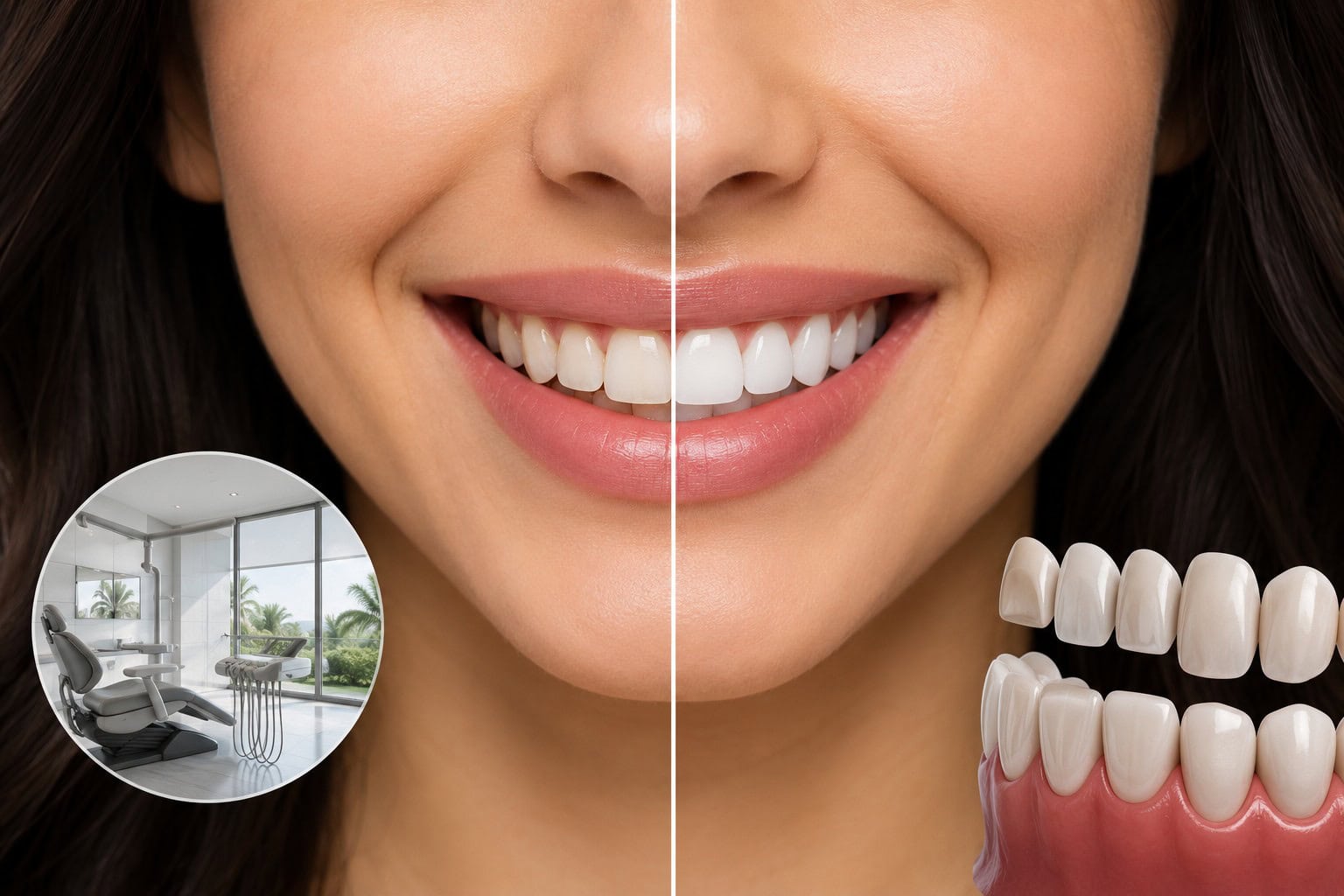
The bright, even smiles seen on screen are rarely the result of one treatment. They may involve planning, gum or orthodontic preparation, whitening, bonding, veneers, crowns, or a carefully selected combination. This guide explains how the process works, why facial features do not determine tooth shape through a simple formula, and why preserving healthy tooth tissue matters.

What a zirconia crown is made of, how the grades differ, what the five-year survival data actually reports, how much tooth it costs you, and how to read a quote that says "porcelain". Cited to PubMed.

Emax is a material, lithium disilicate glass-ceramic. A veneer is a technique. Here is the difference, measured in millimetres of tooth removed and in published ten-year survival data.

What composite bonding and composite veneers actually are, what the published survival data reports, how composite compares with porcelain in a head-to-head trial, why it can be repaired in the chair, and the maintenance question nobody answers for patients who fly home. Cited to PubMed.

PFM stands for porcelain fused to metal. What is actually inside the crown, what four different restorations the word "porcelain" can hide on a quote, what the survival data reports across twenty years, and where the black line at the gum comes from. Cited to PubMed.

What your temporary crown is doing and how long the published data says it lasts: long-term temporaries followed for a median of 362 days recorded a 14.1% fracture rate and 18.1% decementation. Plus what to do if it comes off far from the clinic that fitted it.

A Hollywood smile is a result; veneers are one way to get there. The materials have numbers: ceramic veneers pooled at 96.13 percent survival for feldspathic, 93.70 percent for leucite-reinforced and 96.81 percent for lithium disilicate at 10.4 years, and bonding to enamel rather than dentin cuts failure roughly tenfold.