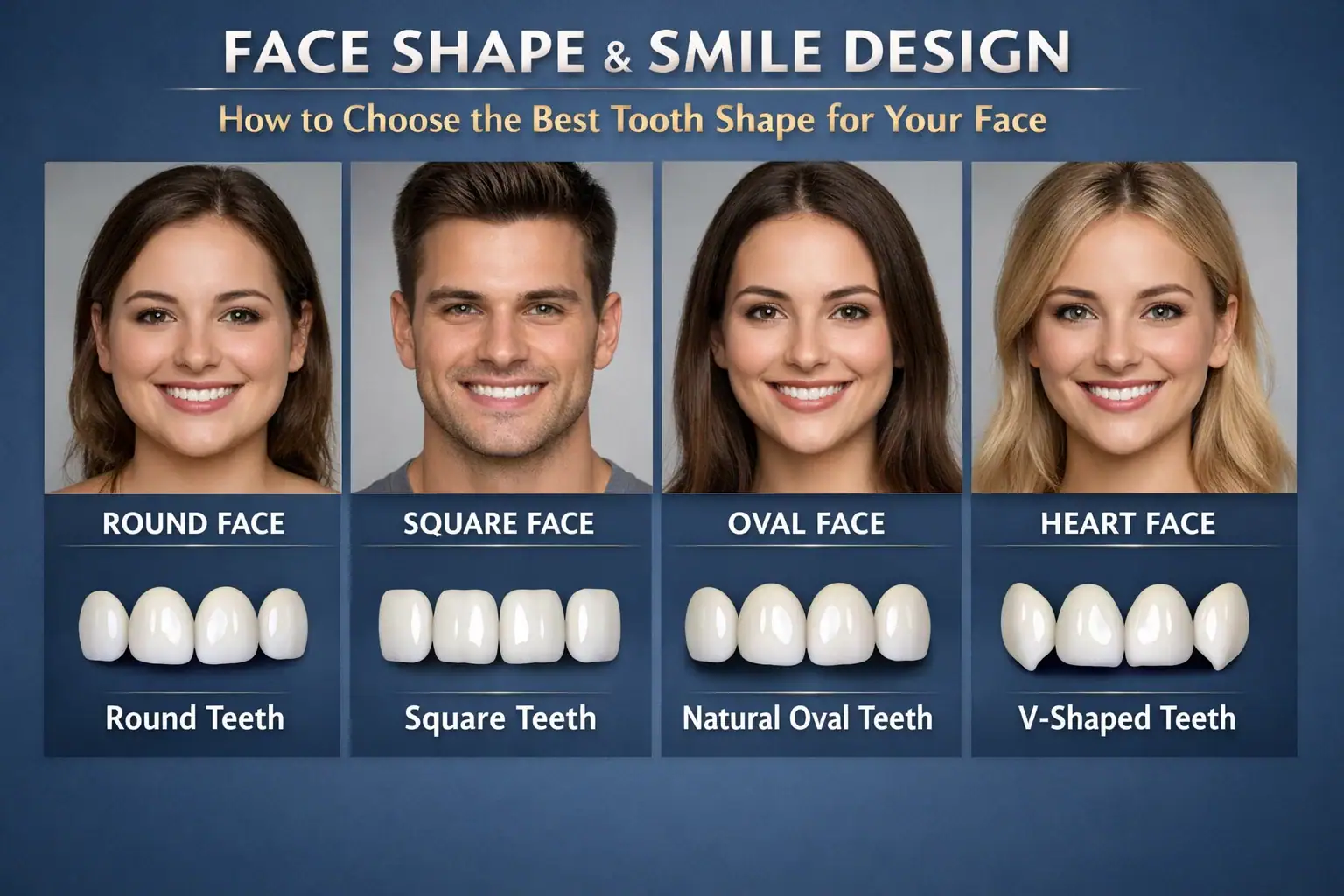
Face Shape and Smile Makeover: How to Choose the Best Tooth Shape for Your Face
Tooth shape mirroring face shape is a design tradition, not a measured rule: across 160 subjects the two matched in just 23.75 percent of cases.
Clinical experience, misunderstood concepts and frequently asked questions. Notes from many years of practice.

Tooth shape mirroring face shape is a design tradition, not a measured rule: across 160 subjects the two matched in just 23.75 percent of cases.

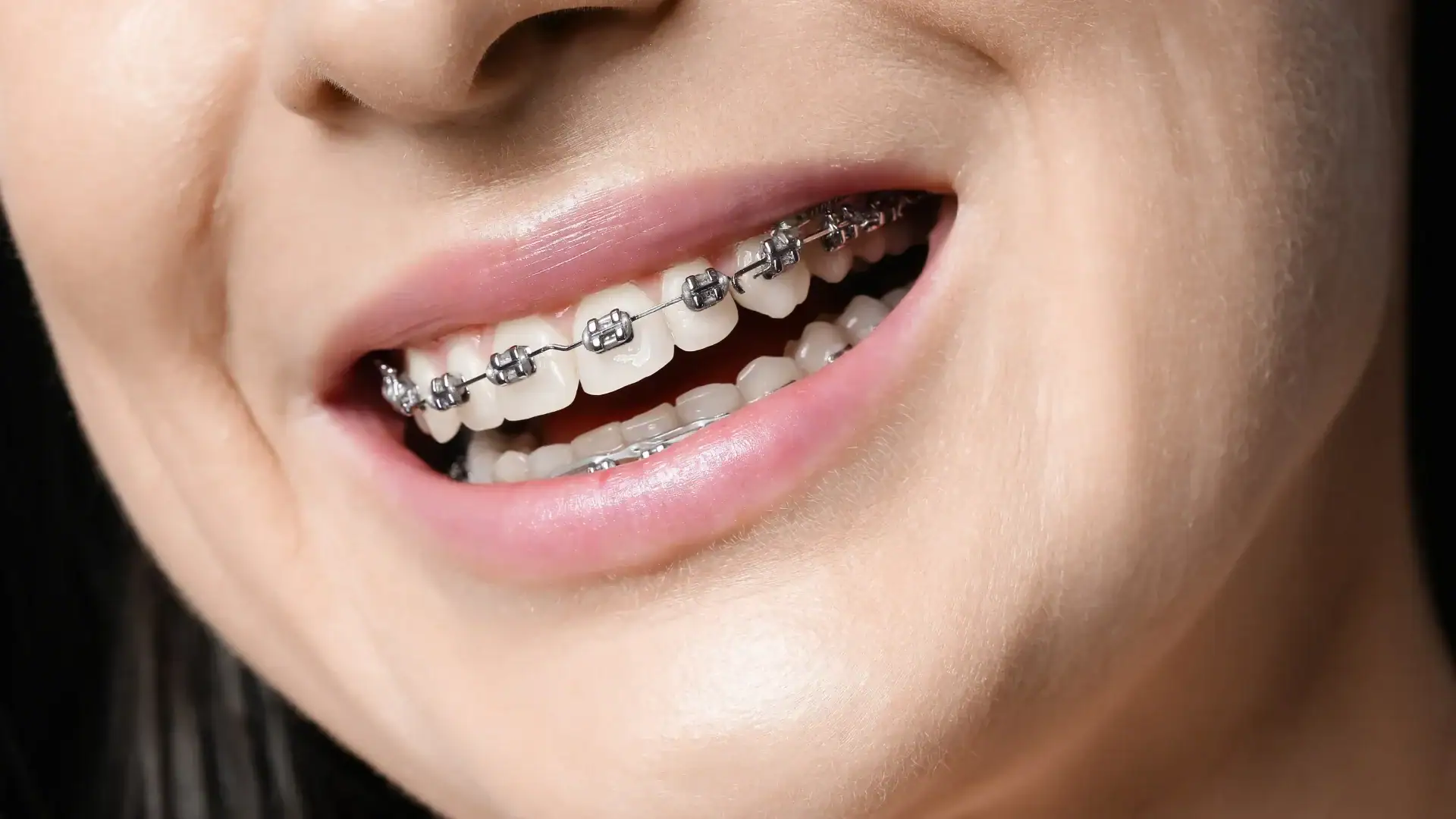
A meta-analysis of 34 clinical trials covering 6,207 patients put average fixed appliance treatment at 24.9 months. Here is what happens at each stage.

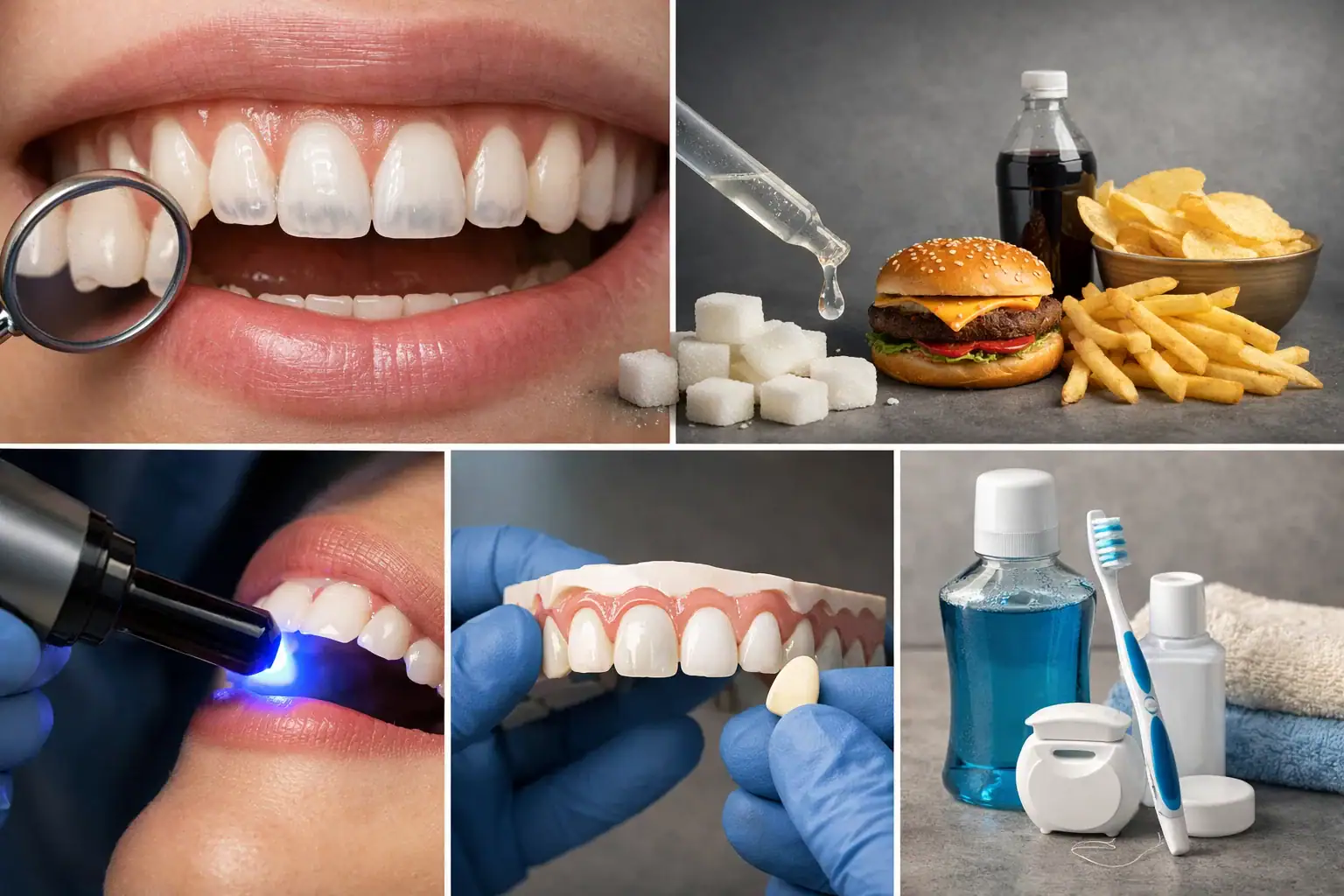
Transparent edges are usually erosive wear. Among 3,187 European adults aged 18 to 35 examined with the BEWE index, 29% showed signs of tooth wear. Reflux, repeated vomiting and snoring all came out as significant risk factors. What can be rebuilt.

Most treatment plans run 5 to 7 days per visit, and implant cases need two visits with healing time in between. Cost is what decides it: in a systematic review of 233 articles from 49 countries, out-of-pocket payment was the factor identified most often, in 136 of them. Where the real risk sits.

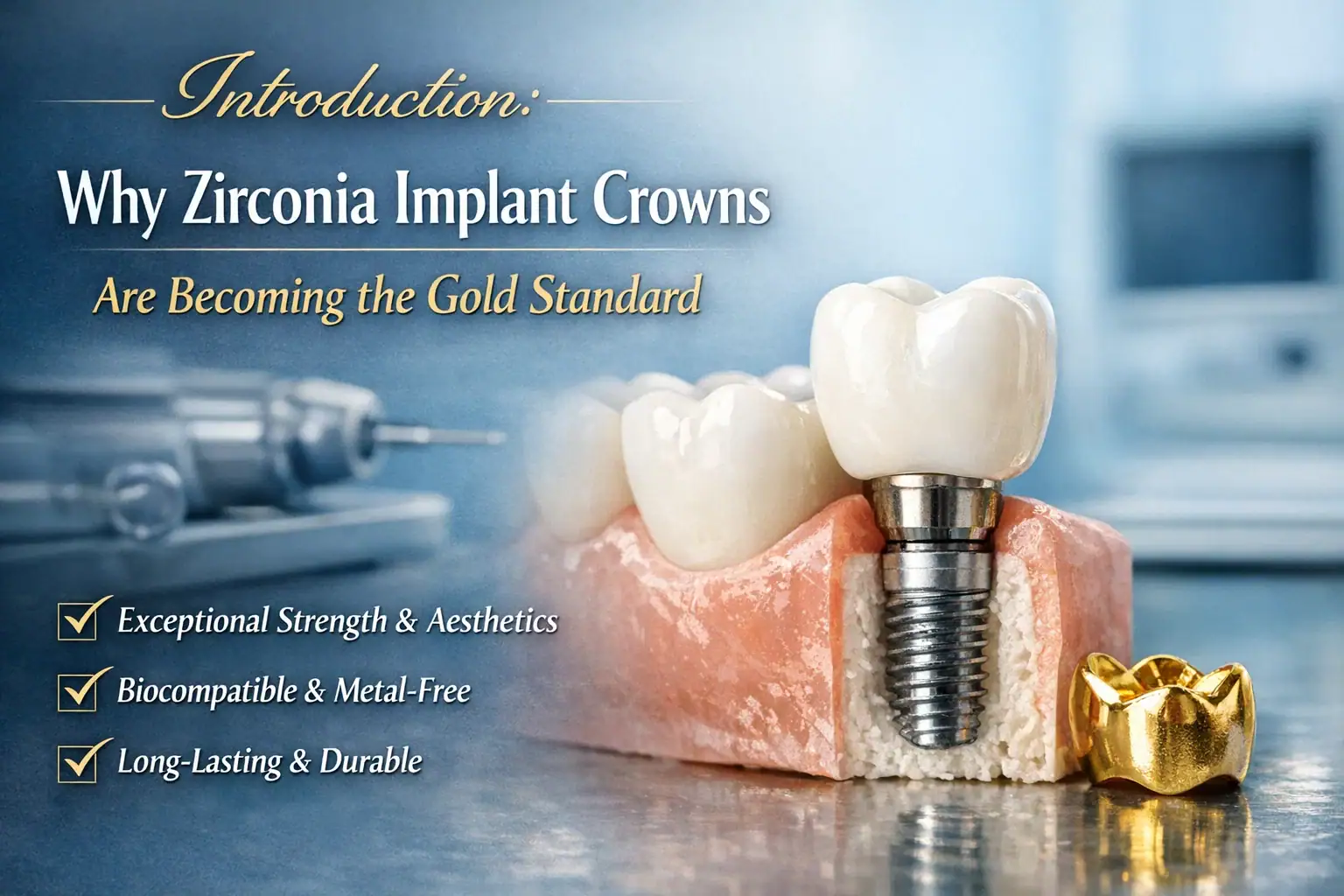
A zirconia implant crown is the visible tooth on an implant, milled from metal-free zirconium dioxide; three-year survival was 96.1% for monolithic crowns.

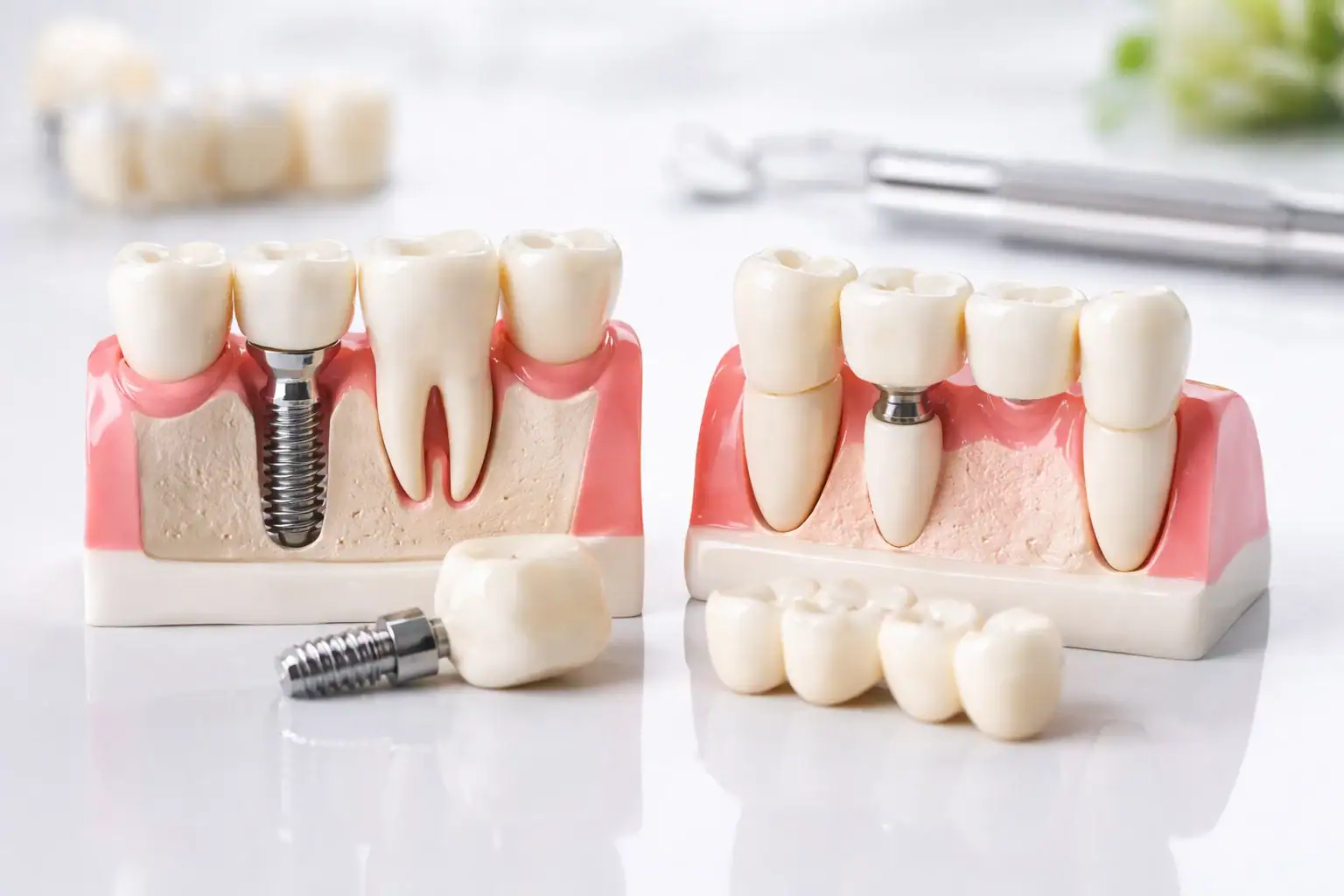
A dental implant replaces the root in bone, while a bridge rests on crowns over two trimmed neighbouring teeth; 10-year survival was 89.4% and 89.2%.

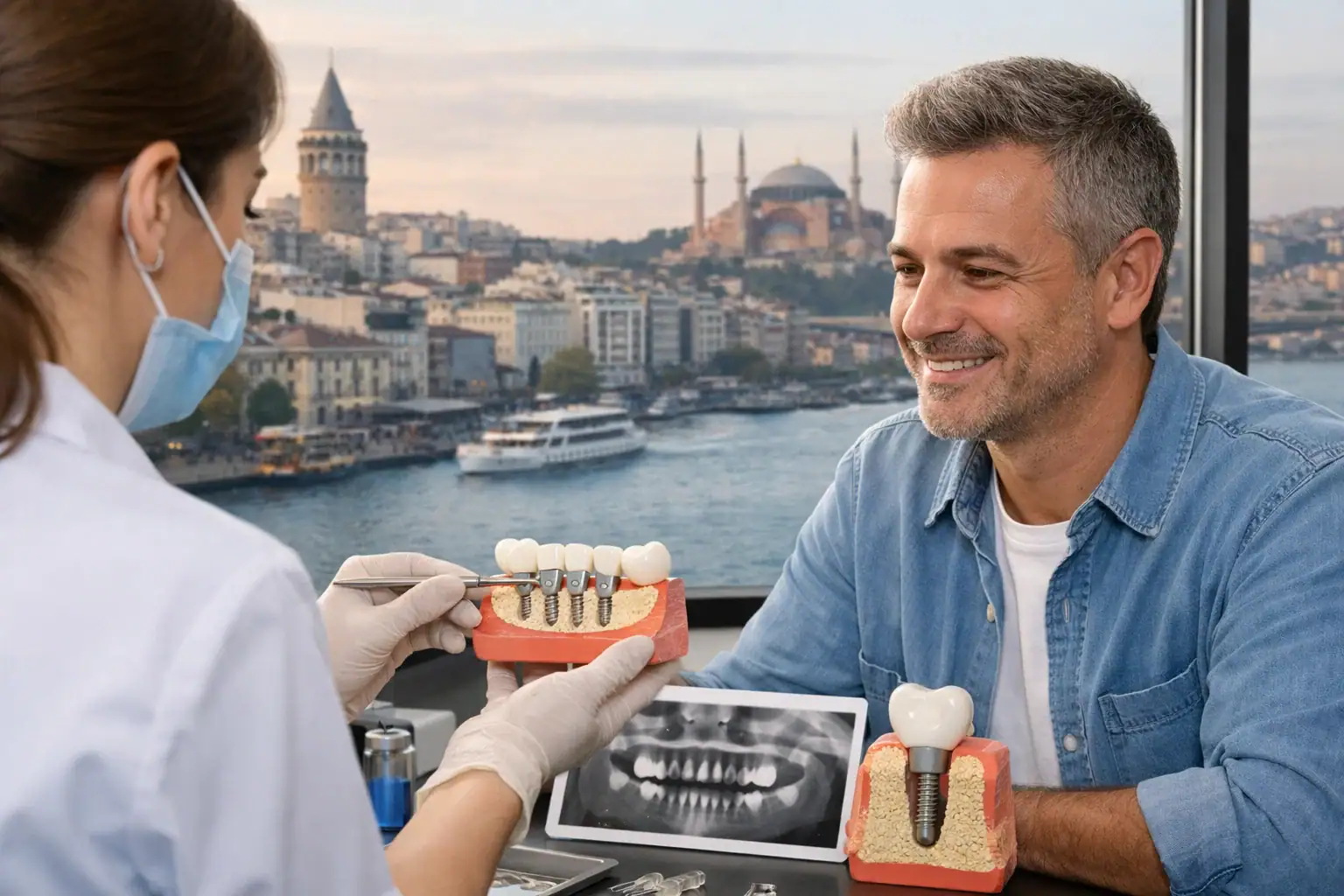
Pooled 10-year survival of contemporary implant systems is 96.4 percent across 18 prospective studies. Treatment in Istanbul, stage by stage.

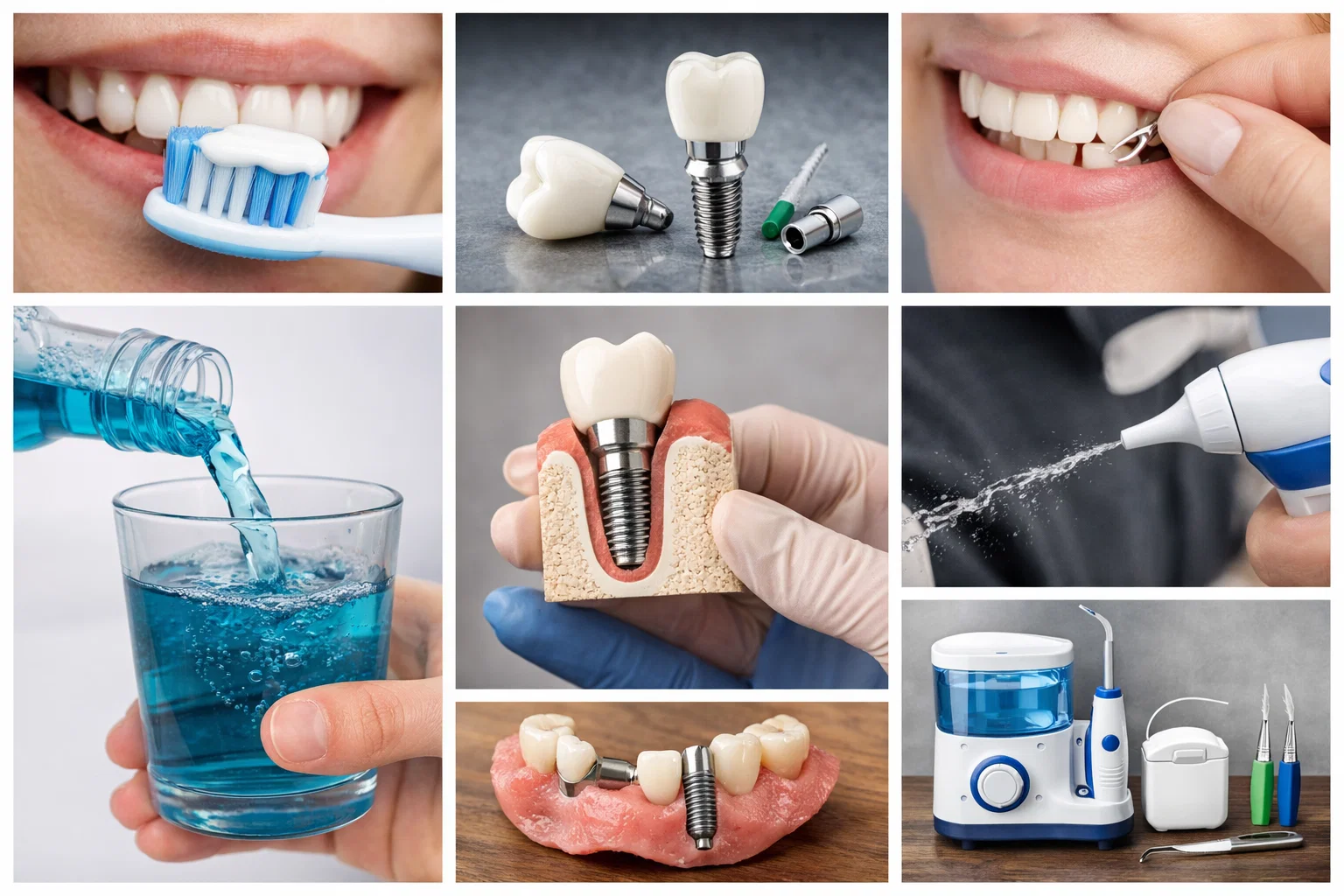
A 57-study meta-analysis put peri-implantitis at 19.53% of patients and 12.53% of implants. Implants do not decay but the tissue around them can: a soft brush twice daily, interdental cleaning once, set recalls.

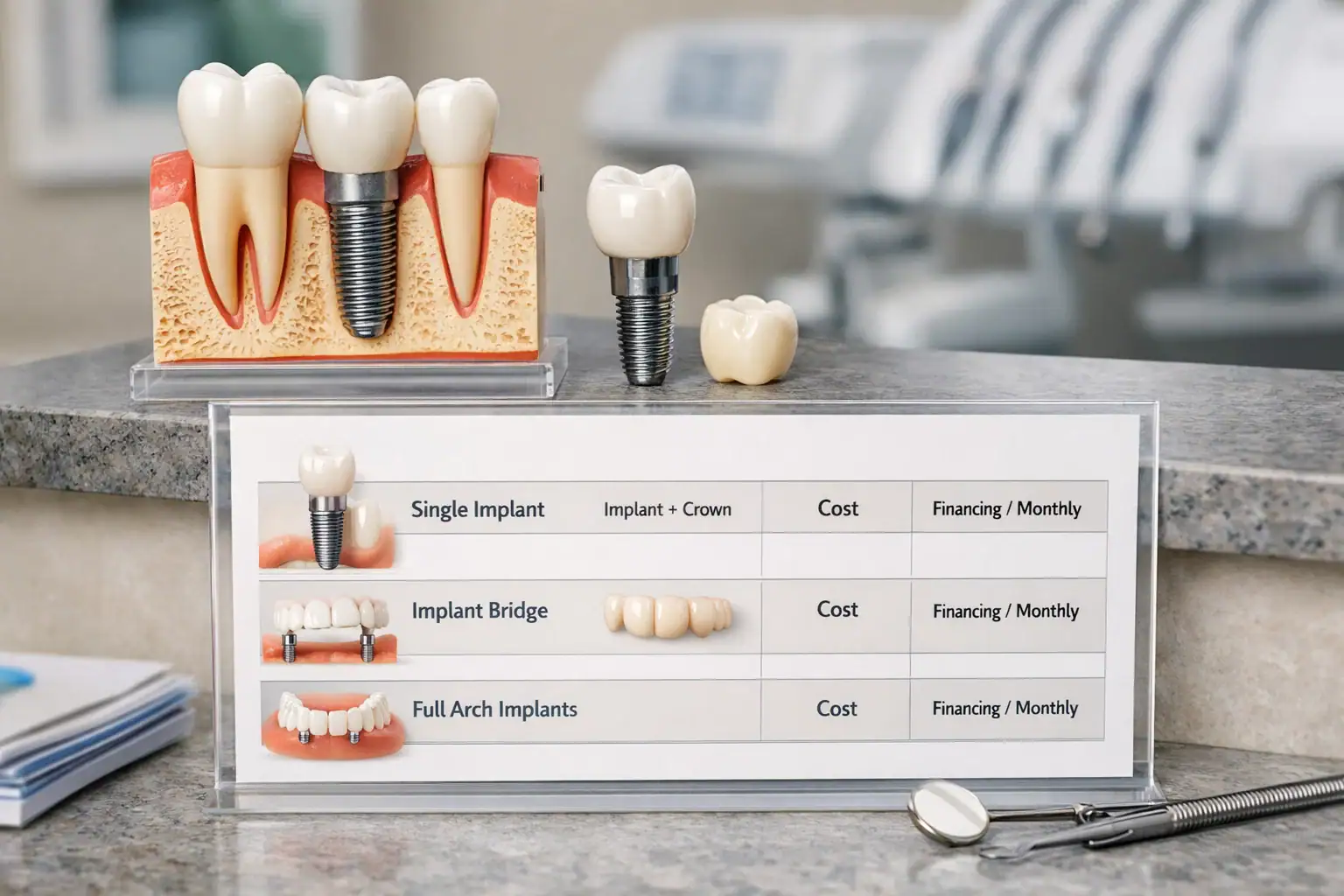
Pooled 10-year implant survival is 96.4 percent, and that figure comes from documented systems placed with proper planning. What moves the price: fixture, abutment, crown material and any grafting.