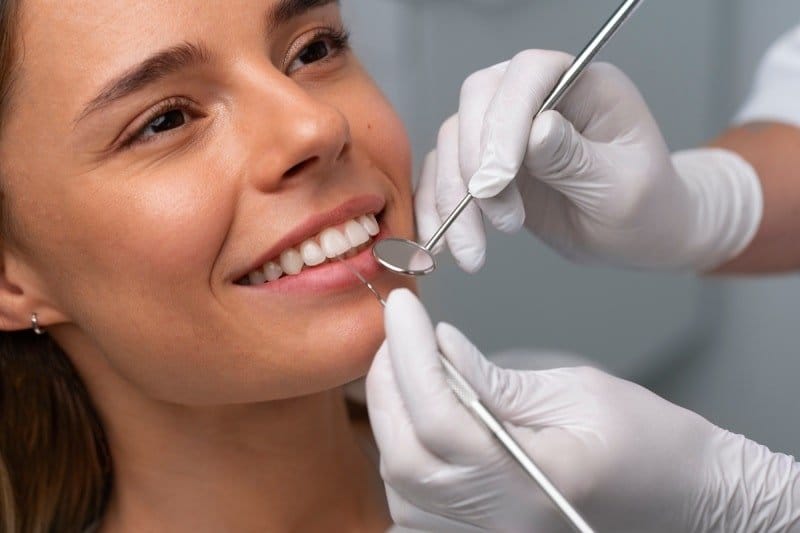
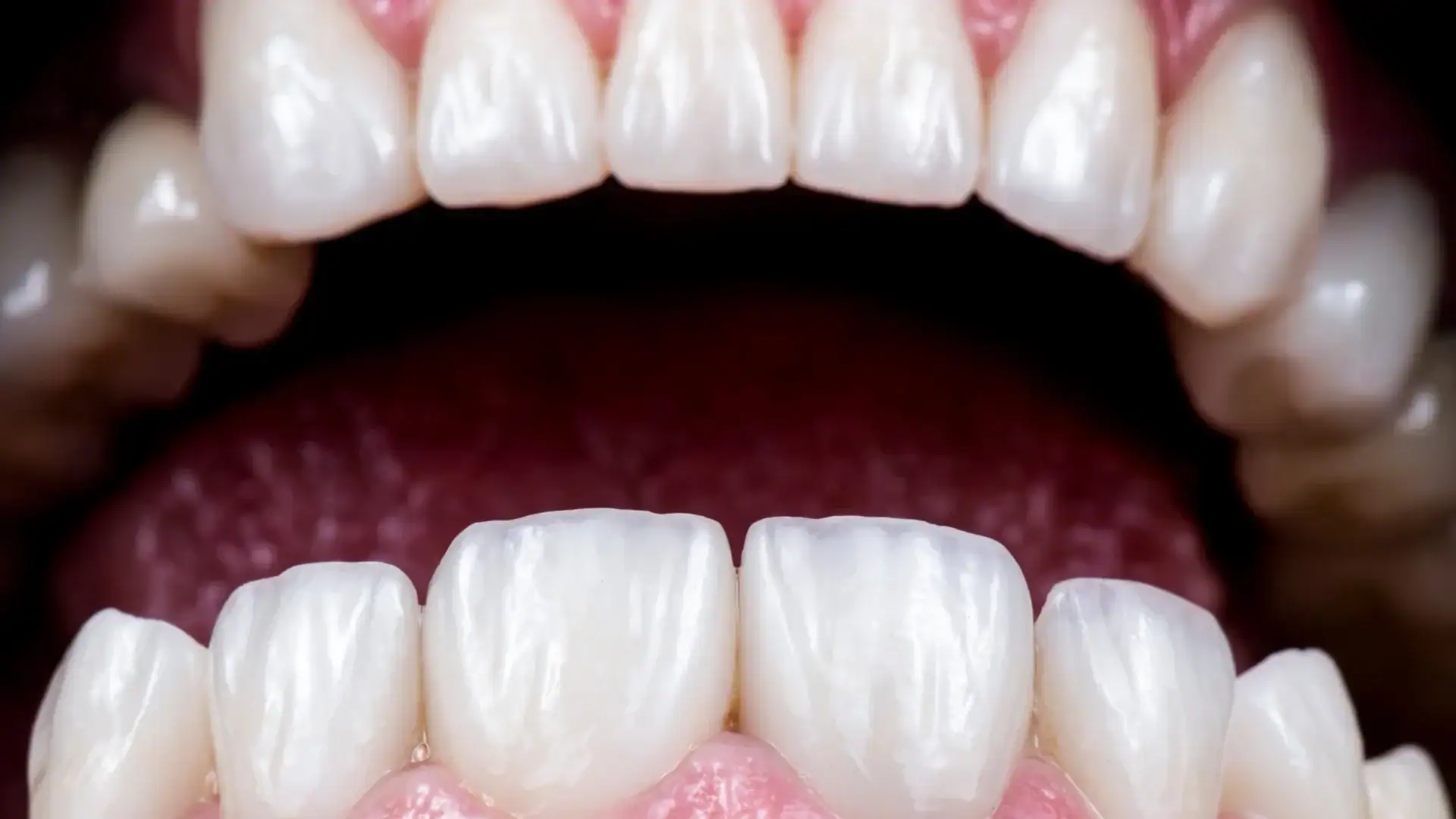
Emax veneers are thin restorations made from lithium disilicate glass-ceramic and bonded to the front surface of a prepared tooth to change its colour or shape, repair chips or close small gaps. The material is what separates them from feldspathic or leucite-reinforced porcelain veneers. In a meta-analysis of 29 clinical studies, lithium disilicate laminate veneers reached a pooled survival of 96.81% at 10.4 years, against 96.13% for feldspathic and 93.70% for leucite-reinforced glass-ceramic, with the lowest complication load of the three: 6.1% technical, 1.9% aesthetic and 0.45% biological events over the same period (PubMed 39523553).
- 01Emax is a material, lithium disilicate glass-ceramic, not a technique. The same material is used for laminate veneers, crowns, inlays and onlays.
- 02Pooled survival of lithium disilicate laminate veneers was 96.81% at 10.4 years across 29 studies, with no statistically significant difference from feldspathic (96.13%) or leucite-reinforced (93.70%) veneers (PubMed 39523553).
- 03The measured advantage is complications rather than survival: lithium disilicate recorded 6.1% technical, 1.9% aesthetic and 0.45% biological events at 10.4 years, against 41.48%, 19.64% and 6.51% for feldspathic (PubMed 39523553).
- 04Translucency is the aesthetic argument: lithium disilicate transmits light in a way that reads closer to natural enamel than opaque conventional porcelain.
- 05Tooth reduction is minimal but not zero. Preparation is decided case by case on how much enamel is present and how far the existing tooth sits from the planned position.
These restorations have become very popular in aesthetic dentistry, offering beauty and durability. Whether you're dealing with discolouration, chips, or gaps in your teeth, Emax veneers can transform your grin into something truly spectacular. In this blog post, we'll explore what Emax veneers are and why they've become a preferred choice in modern dentistry. Say goodbye to dull smiles and hello to confidence!
/ Emax Veneers and Their Benefits in Dental Aesthetics
Emax veneers are ultra-thin shells made from lithium disilicate ceramic. They are designed to cover the teeth' front surface, enhancing appearance and function.
These veneers have gained popularity due to their strength and aesthetic appeal. Unlike traditional materials, Emax offers a natural look that resembles real tooth enamel.
The fabrication process involves advanced technology, ensuring colour matching and fit precision. This results in a natural blend with your existing smile.
Patients often choose Emax because they can correct dental imperfections like chips, stains, or misalignments without extensive procedures.
Their lightweight nature allows for minimal tooth reduction during application, preserving more of your natural structure compared to other options available on the market.
Benefits of Emax Veneers in Dental Aesthetics
Emax veneers offer numerous advantages that enhance dental aesthetics significantly. Their exceptional translucency mimics the natural shine of teeth, providing a lifelike appearance. This quality makes them particularly appealing for those seeking a radiant smile.
Durability is another standout feature. Emax veneers are crafted from lithium disilicate glass-ceramic, so they remarkably withstand daily wear and tear. Patients can enjoy their beautiful smiles without worrying about chips or cracks.
Additionally, these veneers require minimal tooth reduction during application. This preservation of natural tooth structure maintains oral health and enhances comfort during the fitting process.
The versatility of Emax veneers is also noteworthy, as they can effectively address multiple cosmetic concerns such as discolouration, misalignment, and gaps between teeth. With so many benefits combined into one solution, it's no wonder they're becoming increasingly popular in modern dentistry.
/ Emax Veneers Compared with Traditional Veneers
Emax veneers stand out from traditional options due to their unique material composition. Made from lithium disilicate glass-ceramic, they offer outstanding strength and durability. This innovative material allows for thinner designs without sacrificing quality.
Traditional veneers often involve more tooth reduction, impacting long-term dental health. Emax veneers require minimal tooth preparation, preserving the natural structure of your teeth.
The aesthetics also differ significantly. Emax provides a translucent finish that mimics the appearance of natural enamel more effectively than conventional porcelain options. This results in a lifelike look that many patients desire .
Additionally, Emax veneers boast superior resistance to chipping and staining compared to traditional alternatives. This means they maintain their beauty over time with less risk of damage or discolouration.
The Process of Getting Emax Veneers
Getting Emax veneers involves precise steps to ensure the best results.
First, you'll schedule an initial consultation with your dentist . During this visit, they will assess your dental health and discuss your aesthetic goals.
Once you're on board, the next step is to prepare your teeth. This may involve minimal tooth reduction for proper fitting. The amount taken off is usually relatively small.
After preparation, impressions of your teeth are made. These impressions help create custom veneers tailored just for you.
Temporary ones can be placed to maintain aesthetics and function while waiting for the lab to fabricate your Emax veneers.
You'll return once they arrive from the lab to have them permanently bonded. Your smile transformation will be complete!
/ Maintenance and Care for Emax Veneers
To keep your Emax veneers remain in top condition, it's essential to establish a proper maintenance routine. Regular dental check-ups are vital, as they allow your dentist to monitor the health of both your teeth and the veneers. Professional cleanings will help maintain their shine and remove any plaque buildup.
Practice good oral hygiene at home by brushing twice daily with a non-abrasive toothpaste. Flossing is equally important; it helps prevent gum disease and keeps food particles from getting stuck between the veneers. Avoid using abrasive materials or harsh chemicals that can damage the surface of your Emax veneers.
Be mindful of what you eat and drink, too. While Emax veneers are resilient, limiting the consumption of staining beverages like coffee or red wine is wise. Additionally, avoid biting down on hard objects such as ice or pens since this can chip or crack the porcelain material.
Always wear a mouthguard if you're involved in sports or have bruxism (teeth grinding). This simple step can go a long way in protecting your investment in beautiful smiles with Emax veneers.
You can enjoy stunning aesthetics for years with just a little attention and care!
Let’s plan the right treatment together.
Free Assessment→