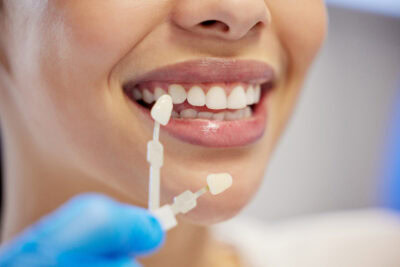
E-max is a brand of lithium disilicate glass ceramic, a material rather than a technique, pressed or milled by CAD/CAM into either a full crown or a thin laminate veneer. It is chosen for front teeth because its light transmission is close to natural enamel, and it needs less tooth reduction than a metal-supported crown. In a 2026 meta-analysis of 64 studies covering 8,051 all-ceramic single crowns, monolithic lithium disilicate recorded the highest 5-year survival of the group at 98.5 percent, against 97.1 percent for metal-ceramic and 90.4 percent for feldspathic ceramic (PubMed 41489982).
- 01E-max names a material, lithium disilicate glass ceramic; laminate veneer names a technique, bonding a thin ceramic layer to the front of a tooth. A laminate can be made from E-max, so the two are not alternatives to one another.
- 02As a full crown, monolithic lithium disilicate reached 98.5 percent 5-year survival in a 64-study meta-analysis of 8,051 all-ceramic and 3,509 metal-ceramic crowns, ahead of metal-ceramic at 97.1 percent and monolithic zirconia at 96.8 percent (PubMed 41489982).
- 03As a laminate veneer, lithium disilicate reached 96.81 percent pooled survival at 10.4 years across 29 studies, with technical complications of 6.1 percent against 41.48 percent for feldspathic veneers over the same period (PubMed 39523553).
- 04The limitation is load, not aesthetics: under heavy posterior chewing forces zirconia is the stronger choice, which is why lithium disilicate is concentrated in the anterior and premolar region.
- 05Two decisions are locked in early: the shade is chosen before fabrication and cannot be changed afterwards, and the enamel reduced during preparation does not grow back. Treatment usually runs over 2 to 3 sessions.
/ Emax restoration in aesthetic dentistry and preferred situations
Emax restoration is part of aesthetic dentistry.
Modern dentistry aims to not only protect dental health; it also aims to meet aesthetic expectations. It is now easier to provide solid, natural and long-lasting dental restorations. Emax coatings, developed in line with this goal, are one of the groundbreaking applications especially in anterior tooth aesthetics . Emax coatings, which stand out with their light transmittance, natural appearance and durability, have become one of the first options considered in dental aesthetics today.
In this comprehensive article, you will find detailed answers to all questions such as "What is Emax coating, how is it done, what are its advantages and disadvantages, who is it suitable for?"
What is Emax Restoration?
Emax coating is a dental coating made of lithium disilicate glass ceramic, with high durability and natural aesthetic properties. It is produced with special pressing or CAD/CAM technologies. This material can be used in both full crown (full coating) and laminate (leaf porcelain) applications.
Emax coatings offer ideal solutions for patients looking for transparency and naturalness, especially in the front teeth. Thanks to its thin structure, it provides a light transmittance close to the natural structure of the tooth and a highly aesthetic appearance is achieved in the mouth.
In Which Situations Is Emax Restoration Preferred?
- In cases where teeth are highly discolored and whitening procedures do not yield results
- In correcting aesthetic defects in front teeth
- In patients with a gap between teeth (diastema)
- In restoring broken or worn teeth
- In correcting slight irregularities
- In smile design applications
- In renewing old and aesthetically inadequate restorations
/ Emax restoration procedure, advantages and disadvantages
Emax restoration is planned through clinical evaluation, tooth preparation, measurement and veneer placement.
Inspection and Planning
The dentist performs a detailed analysis of the mouth and teeth structure. The patient's expectations, facial type, lip movements, gum health and closing relationships are evaluated.
Preparation of Teeth
For Emax coating, minimal abrasion is made from the tooth surface. In some laminate applications, this abrasion may be almost non-existent.
Taking Measurements
Measurements of the prepared teeth are taken. These measurements are taken with traditional methods or digital scanners (intraoral scanners) to ensure high precision.
Temporary Veneers
During the laboratory process, temporary veneers are made for aesthetics and comfort.
Placement of Permanent Veneer
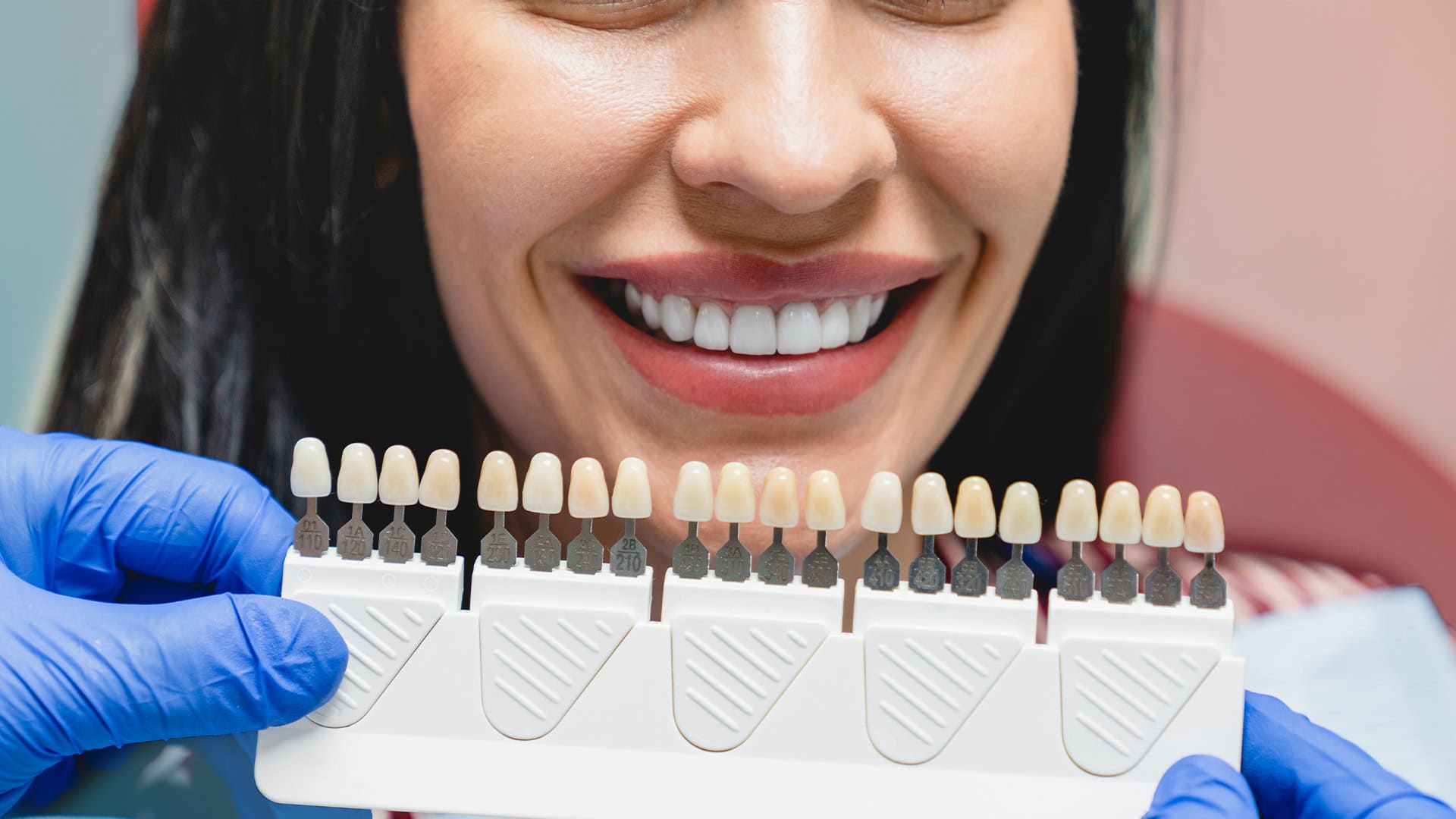
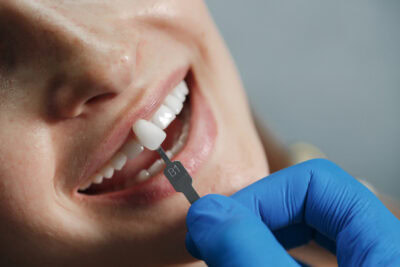
Emax veneers are fixed to the tooth using special adhesives. Color, fit and aesthetic controls are meticulously performed.
Advantages of Emax Coating
- Natural Appearance: Provides an appearance very close to natural teeth thanks to its high light transmittance.
- High Durability: Strong against daily chewing forces.
- Minimal Tooth Abrasion: The living tissue of the tooth is protected.
- Color Stability: Does not yellow or change color.
- Biocompatible Structure: Gum-friendly, low risk of inflammation or allergy.
- Gum Aesthetics: Works in harmony with the gum and supports the aesthetic line.
Disadvantages of Emax Coating
- Limitation of Use in Back Teeth: Stronger materials (zirconia) may be preferred in teeth exposed to high chewing forces.
- High Cost: More expensive than traditional porcelain veneers.
- Requires Precise Application: It is important to have it done by experienced physicians.
/ Emax coating comparisons, smile design and laminate veneers
Emax coatings stand out in terms of aesthetic and natural appearance. It prevents the tooth from looking artificial thanks to its light permeability. It is the ideal choice for front teeth.
Zirconia coatings are superior in terms of durability. It is especially suitable for the back areas where intense chewing force is applied, but it is not as transparent as Emax in terms of aesthetics.
Metal-supported porcelain coatings offer a more economical alternative. However, they are not as successful as Emax in terms of aesthetic quality and dark lines may form at the gum edge over time.
As a result; Emax is more suitable for patients looking for naturalness in front teeth, and zirconia coating is more suitable for patients looking for durability in back teeth.
Where the front teeth need a thin ceramic layer rather than a full crown, the same lithium disilicate is used as laminate veneers. Every crown and veneer option, with the preparation each one asks for, is listed under prosthodontics.
Smile Design Before and After Emax Veneer
A detailed smile design plan is carried out before the Emax veneer is applied. During this process, the patient's:
- Facial features,
- Lip structure,
- Smile line,
- Gum levels are analyzed.
The smile design process is sometimes supported digitally (Digital Smile Design, DSD). Thus, the patient can see their new smile in a digital environment before the veneers are applied.
Differences Between Emax Restorations and Laminate Veneers
Emax coating and laminate coating are often confused.
The important differences are as follows:
- Emax is a material name (lithium disilicate ceramic).
- Laminate is an application method (bonding thin porcelain leaves to the tooth).
In other words, laminate can be made using Emax. Emax laminates provide extremely successful results in terms of both aesthetics and durability.
/ Emax veneer care, risks and longevity
Emax veneer care includes routine oral care, possible errors, pre-treatment considerations and longevity.
- Teeth should be brushed twice a day with a soft-bristled brush.
- Plaque accumulation should be prevented by using dental floss and interdental brushes.
- Acidic and sugary foods should be limited.
- If there is a problem with teeth grinding at night, a night plate should be used.
- Regular dentist check-ups should be done every 6 months.
Regular care significantly increases the life and aesthetic appearance of the veneers.
Emax Veneer Errors and Reasons for Failure
The reasons for failure in Emax veneers are as follows:
- Wrong indication selection (e.g. using Emax on teeth with excessive chewing force)
- Insufficient or excessive abrasion of the tooth
- Failure to comply with adhesive protocols
- Inadequate oral hygiene
- Missing follow-up appointments
For these reasons, Emax application should be performed by experienced dentists.
Things to Know Before Getting an Emax Veneer
The abrasions done to the tooth cannot be reversed.
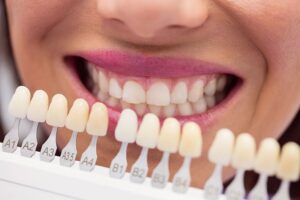
The color selection cannot be changed later, the right choice must be made at the beginning.
The veneer is long-lasting but requires maintenance.
The procedure is completed in an average of 2-3 sessions.
Acting consciously makes the treatment process more successful for both the patient and the doctor.
How Long Does an Emax Veneer Last?
With proper application and good oral hygiene, Emax veneers can be used for 10–15 years or longer without any problems.
Gum health and regular checkups extend the life of the veneers.
/ Frequently Asked Questions
Is Emax or zirconia better?
Emax is preferred for aesthetics, zirconia is preferred for durability.
Does Emax coating change color over time?
No. It is quite resistant to color change.
Does Emax coating break?
Rarely, it can break due to excessive force or trauma.
Is there sensitivity after Emax coating?
Slight sensitivity is normal in the first days, it passes quickly.
Perfect Smiles with Emax Coating
Emax coating has gained an important place in modern dentistry by offering dental aesthetics and functionality together. With the right planning, an experienced dentist's practice and regular oral care, Emax coatings provide an aesthetic and healthy smile for many years.
Emax coating is an excellent choice for a natural, transparent and solid smile.

Let’s plan the right treatment together.
Free Assessment→- 1.Pjetursson BE, Pitta J, Balet A, Bjarnadottir GR, Sailer I, Romandini P. A Systematic Review and Meta-analysis Evaluating the Survival, Failure, and Complication Rates of Metal-Ceramic, Veneered, and Monolithic All-Ceramic Tooth-Supported Single Crowns-Part 1. Int J Prosthodont 2026;39:308-324. PubMed 41489982
- 2.Klein P, Spitznagel FA, Zembic A, Prott LS, Pieralli S, Bongaerts B, et al. Survival and Complication Rates of Feldspathic, Leucite-Reinforced, Lithium Disilicate and Zirconia Ceramic Laminate Veneers: A Systematic Review and Meta-Analysis. J Esthet Restor Dent 2025;37:601-619. PubMed 39523553