An impacted tooth is a tooth that fails to reach its normal position in the dental arch within the expected eruption period because bone, soft tissue or a neighbouring tooth blocks its path; it may stay fully covered or emerge only partly. Third molars are the most affected site: a meta-analysis of 98 studies covering 183,828 subjects put the pooled prevalence of impacted third molars at 36.9% per subject and 46.4% per tooth (PubMed 39768456). Upper canines are the second common site and are usually managed by surgical exposure with orthodontic traction rather than removal.
- 01Impaction is defined by position, not by pain: a fully impacted tooth stays under bone or gum, a partially impacted tooth breaks through only in part, and either can remain symptom-free for years while damaging neighbouring structures.
- 02Pooled prevalence of impacted third molars is 36.9% per subject and 46.4% per tooth across 98 studies and 183,828 subjects, highest in Asia at 43.1% and lowest in Europe at 24.5% (PubMed 39768456).
- 03Women carry a slightly higher likelihood of third molar impaction, odds ratio 1.173, and mandibular impaction is more frequent than maxillary impaction (PubMed 39768456).
- 04Impacted maxillary canines sit palatally in 56.99% of cases and are associated with root resorption of the adjacent tooth: resorption was slight in 43.2% and severe in 30.9% of affected cases across 18 CBCT studies (PubMed 30165975).
- 05Classification follows angulation, mesial, distal, vertical and horizontal, and depth, soft tissue versus bony; after surgical removal sutures come out around day 7 while bone healing runs over months.
/ Impacted Tooth Definition and Types
Introduction: What Is an Impacted Tooth?
An impacted tooth is a tooth that fails to erupt properly into the dental arch within the expected time frame, often due to a physical obstruction like bone, soft tissue, or neighboring teeth. It can remain fully trapped (fully impacted) or only partially emerge (partially impacted), leading to pain, infection, or damage to adjacent teeth.
While impacted wisdom teeth (third molars) are the most commonly affected, impacted canine teeth also pose serious orthodontic and functional concerns.
Types of Impacted Teeth
1. Impacted Wisdom Teeth
Also known as third molars, these teeth erupt late (typically between ages 17–25). Due to limited space at the back of the mouth, they often remain impacted, causing pain, inflammation, or infections like pericoronitis.
2. Impacted Canine Teeth
The canine tooth, especially in the upper jaw, plays a critical role in bite alignment and aesthetics . Impaction is common during adolescence and often requires orthodontic intervention.
3. Other Impacted Teeth
Though less common, premolars and second molars can also become impacted, particularly in overcrowded arches or in patients with delayed tooth eruption.
/ Understanding Impacted Teeth
What Causes an Impacted Tooth?
Common causes include:
- Lack of jaw space
- Overcrowding or malocclusion
- Abnormal tooth angle or rotation
- Genetic predisposition
- Delayed loss of baby teeth
- Jaw trauma or developmental issues
- Obstruction by cysts or tumors
What Are the Symptoms of an Impacted Tooth?
An impacted tooth can remain asymptomatic or cause the following signs:
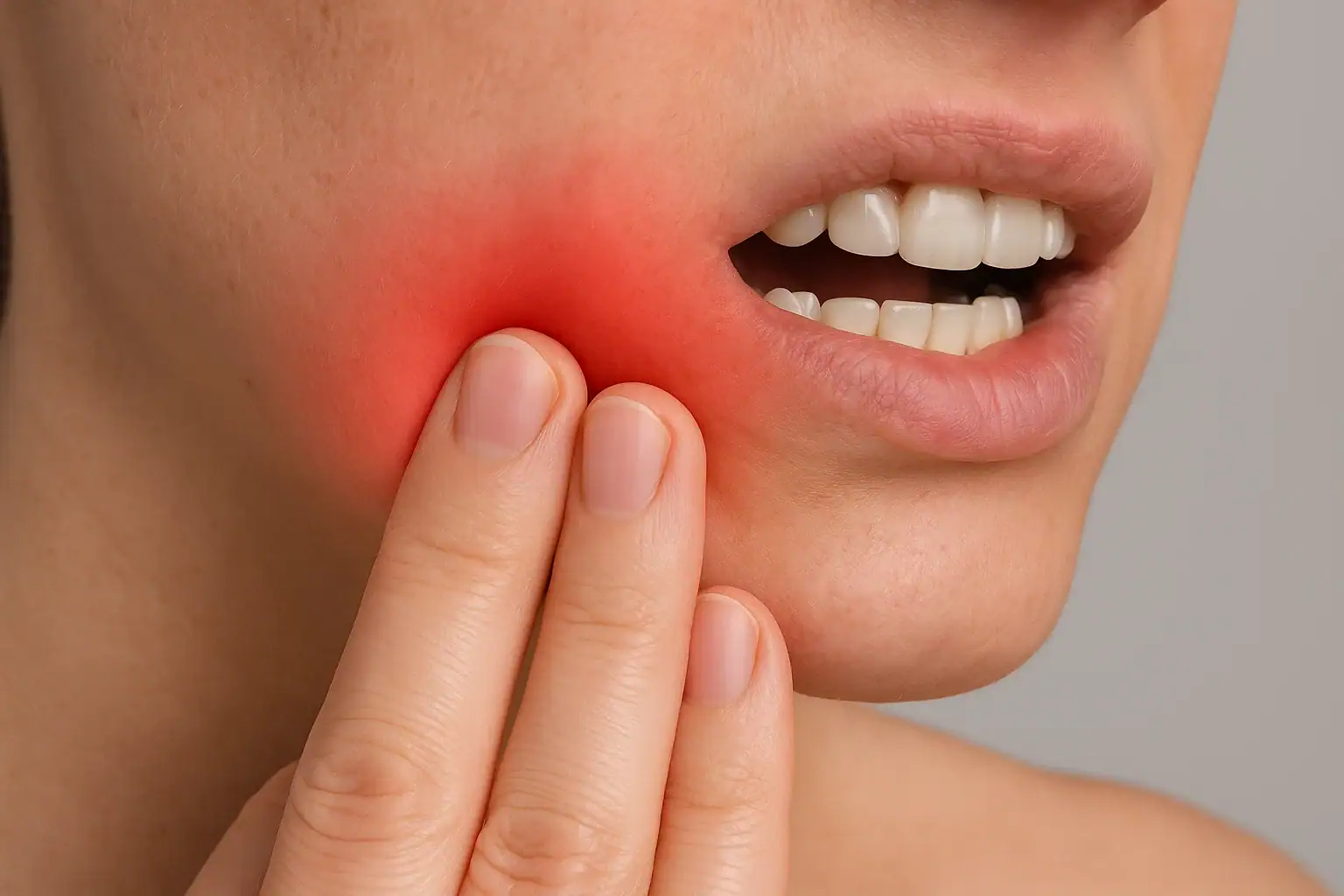
- Swollen, red, or bleeding gums
- Persistent jaw pain or pressure
- Difficulty opening the mouth (trismus)
- Foul breath or bad taste
- Headaches or earaches
- Shifting or crowding of adjacent teeth
- Cyst formation or infection
Impacted wisdom tooth symptoms often include jaw stiffness, swelling in the lower face, and pain radiating to the ear or neck .
Can an Impacted Wisdom Tooth Cause Neck Pain?
Yes. An impacted wisdom tooth can cause referred pain that extends to the jaw, ear, head, and neck. The inflammation or infection may spread and irritate surrounding nerves, leading to discomfort beyond the oral cavity.
What Does an Impacted Wisdom Tooth Look Like?
On a panoramic X-ray or CBCT scan, an impacted wisdom tooth may appear:
- Horizontally or diagonally positioned
- Pressed against the adjacent molar
- Trapped below the gum or jawbone
- Surrounded by a fluid-filled dentigerous cyst
Classification of Tooth Impaction
Impacted teeth are classified based on their angulation and eruption pattern:
- Mesial Impaction : Tooth tilts forward
- Distal Impaction : Tooth tilts backward
- Vertical Impaction : Tooth is in a normal orientation but fails to erupt
- Horizontal Impaction : Tooth lies flat and presses against others
- Soft Tissue Impaction : Covered by gums but not bone
- Bony Impaction : Completely enclosed in bone
/ Impacted Teeth Diagnosis and Treatment
Diagnosis: How Dentists Identify an Impacted Tooth
- Clinical Examination : Visual inspection for swelling, tenderness, or eruption delay.
- Panoramic X-ray or CBCT : To assess exact location and angle.
- 3D Imaging : Helps assess root structure and relation to nerves or sinuses.
Associated Risks & Complications
If left untreated, an impacted tooth can lead to:
- Infection (pericoronitis)
- Tooth decay on adjacent teeth
- Periodontal disease
- Cyst or tumor formation
- Root resorption of nearby teeth
- Malocclusion (bite misalignment)
- Chronic sinus issues (if in the upper jaw)
Impacted Tooth and Oral Pathology
A neglected impacted tooth may trigger:
- Dentigerous cyst : A fluid-filled sac around the crown of the impacted tooth
- Odontogenic tumors : Rare but possible
- Resorption of adjacent roots
- Loss of surrounding bone
Early detection through imaging is crucial to prevent these outcomes.
Treatment Options for Impacted Teeth
1. Observation
Asymptomatic impacted teeth may be monitored regularly through dental checkups and imaging.
2. Surgical Extraction
Wisdom teeth and severely impacted teeth are often surgically removed.
Procedure includes :
- Local or general anesthesia
- Gum flap incision
- Bone removal if needed
- Tooth sectioning and extraction
- Suturing
Healing typically takes 7–10 days, but full bone healing may take months.
3. Orthodontic Exposure & Traction
In impacted canine tooth cases, orthodontists may surgically expose the tooth and guide it into place using braces.
4. Pain & Infection Management
- Antibiotics for infection
- Anti-inflammatory medications
- Warm saltwater rinses
- Soft diet recommendations
/ Recovery and Ongoing Care After Impacted Tooth Surgery
Recovery After Tooth Impaction Surgery
Timeline
- Day 1–2 : Swelling, minor bleeding, and discomfort
- Day 3–4 : Peak inflammation
- Day 7 : Suture removal (if non-dissolvable)
- 2–3 weeks : Gum healing
- 3–6 months : Complete bone healing
Aftercare Tips
- Apply ice for the first 24 hours
- Avoid smoking, alcohol, or using straws
- Sleep with head elevated
- Eat soft, lukewarm food (soups, smoothies, yogurt)
- Rinse gently with warm saltwater
Avoid hard, crunchy, spicy, or hot foods for at least a week.
Prevention: Can Impacted Teeth Be Avoided?
Although genetics plays a major role, you can reduce the risk through:
- Regular dental check-ups
- Early orthodontic evaluations (by age 7)
- Early imaging (especially for wisdom teeth)
- Timely removal of baby teeth
When Should You See a Dentist?
You should consult a dentist if you experience:
- Jaw or gum pain
- Persistent swelling
- Pus discharge or bad breath
- Difficulty chewing or opening your mouth
- Recurrent sinus infections
- Misalignment or shifting of other teeth
Who Treats Impacted Teeth?
- Oral and Maxillofacial Surgeons : Perform surgical extractions
- Orthodontists : Handle canine impactions and alignment issues
- General Dentists : Monitor and refer when necessary
Impacted Teeth in Children & Adolescents
- Commonly affects canines
- May delay proper bite development
- Early detection allows for less invasive correction
American Association of Orthodontists recommends an orthodontic screening by age 7.
Global Prevalence and Insights
- 36.9% of people have at least one impacted third molar
- Females are more commonly affected due to smaller jaw size
- East Asian populations show higher impaction rates due to jaw structure
Conclusion: Don’t Let an Impacted Tooth Go Untreated
An impacted tooth can silently cause damage long before symptoms appear. Whether it's a wisdom tooth, canine, or another type, early diagnosis and timely treatment are crucial. Consult a dental professional to determine the best course of action. And regain control of your oral health before complications arise.
/ Frequently Asked Questions (FAQs)
What is an impacted tooth?
An impacted tooth is one that does not erupt fully due to a blockage in the jaw or gum tissue.
What is an impacted wisdom tooth?
A third molar that fails to fully emerge, often causing swelling, infection, or pain in the back of the mouth.
What does an impacted wisdom tooth look like?
It may appear tilted, horizontal, or submerged in the bone when viewed on a dental X-ray.
Can an impacted wisdom tooth cause neck pain?
Yes, especially when surrounding tissues or nerves are inflamed, the pain can radiate to the neck or head.
What are the symptoms of an impacted wisdom tooth?
- Gum swelling
- Jaw stiffness
- Ear or neck pain
- Foul breath
- Crowding of nearby teeth
Let’s plan the right treatment together.
Free Assessment→- 1.Pinto AC, Francisco H, Marques D, Martins JNR, Caramês J. Worldwide Prevalence and Demographic Predictors of Impacted Third Molars-Systematic Review with Meta-Analysis. J Clin Med 2024;13. PubMed 39768456
- 2.Schroder AGD, Guariza-Filho O, de Araujo CM, Ruellas AC, Tanaka OM, Porporatti AL. To what extent are impacted canines associated with root resorption of the adjacent tooth?: A systematic review with meta-analysis. J Am Dent Assoc 2018;149:765-777.e8. PubMed 30165975